WAR ON DRUGS

I’ve been working on a video to experiment with some ideas of debates around the use of substances like marijuana and Psilocybin as a natural occurring event that connects humans with the growing world. I have been thinking of this natural growth of these substances in relationship to creative growth of a person after these experiences. The apparent ability of these substances to open your mind and have you reconsider concepts and our function in the world/position in society. However I have also been thinking about the illegality of these substances, how they are represented in society and how they work to perpetuate internalised racism and discrimination through the criminal justice system. Listening to podcasts and reading like The Mile Higher (https://www.youtube.com/watch?v=859LCNabe1g&t=1890s) I have found it interesting to consider how this really heavy, dark and negative side.

As much as I’ve been focused on hippies and their cool culture it is also important to consider how latinos, black people and hippies were targeted throughout history. The war on drugs was arguably an attempt to target these members of society through the criminal justice system with a massive focus on charging these people with non violent crimes and so focus is deterred from more serious crimes that affect society on large.

https://www.vox.com/2016/3/22/11278760/war-on-drugs-racism-nixon

President Richard Nixon declared the “War on drugs”, a campaign of drug prohibition in 1971. However, ulterior motives were revealed in an article for Harper’s magazine by John Ehrlichman, Nixon’s domestic policy chief at the time, “the Nixon White House had two enemies: black people and the anti-war left… if we could associate heroin with black people and marijuana with the hippies, we could project the police into those communities…and most of all, demonize them night after night on the evening news.”[1] Further evidence of the war on drugs as perpetuating racial prejudice in America can be seen through a report in 2012 from the US Sentencing Commission. It revealed that black Americans aren’t most likely to use or sell drugs but are more likely to be arrested for them and those who are convicted face longer prison sentence for the same crimes.[2] I felt it was important to consider the illegality of drugs when investigating attitudes, perceptions and nostalgia in my project.


[1] https://www.npr.org/2016/03/27/472023148/legalize-all-drugs-the-risks-are-tremendous-without-defining-the-problem?t=1589372368111

President Richard Nixon declared the “War on drugs”, a campaign of drug prohibition in 1971. However, ulterior motives were revealed in an article for Harper’s magazine by John Ehrlichman, Nixon’s domestic policy chief at the time, “the Nixon White House had two enemies: black people and the anti-war left… if we could associate heroin with black people and marijuana with the hippies, we could project the police into those communities…and most of all, demonize them night after night on the evening news.”[1] Further evidence of the war on drugs as perpetuating racial prejudice in America can be seen through a report in 2012 from the US Sentencing Commission. It revealed that black Americans aren’t most likely to use or sell drugs but are more likely to be arrested for them and those who are convicted face longer prison sentence for the same crimes.[2] I felt it was important to consider the illegality of drugs when investigating attitudes, perceptions and nostalgia in my project.


[1] https://www.npr.org/2016/03/27/472023148/legalize-all-drugs-the-risks-are-tremendous-without-defining-the-problem?t=1589372368111

[2] https://www.vox.com/2016/3/22/11278760/war-on-drugs-racism-nixon
Other Worldly Performance

I have been inspired by the work I have experienced and researched that transforms the viewer into alternative realities. With my own intension of creating an other worldly experience I have been looking at the methods used by others to influence my performance score.
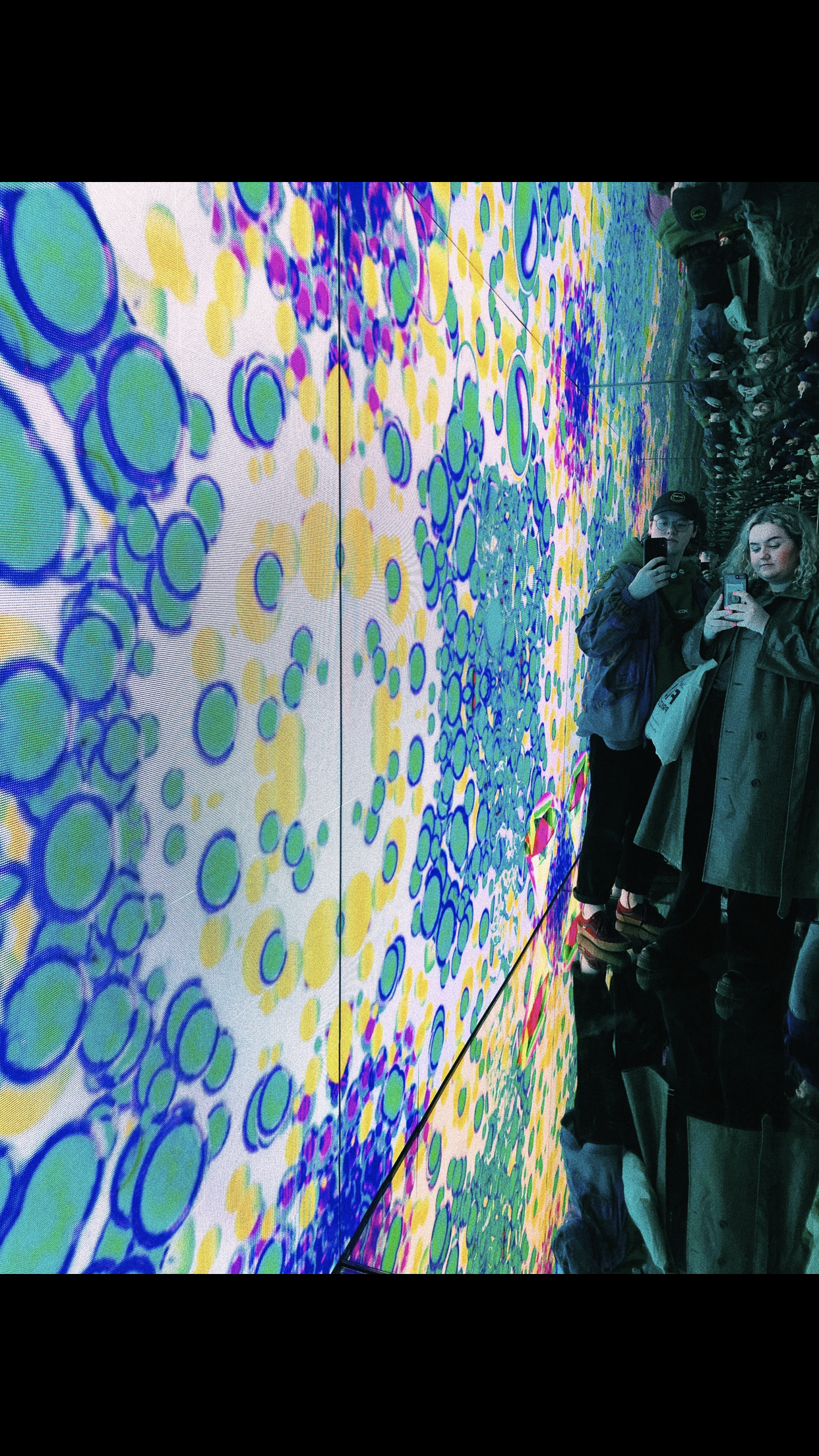
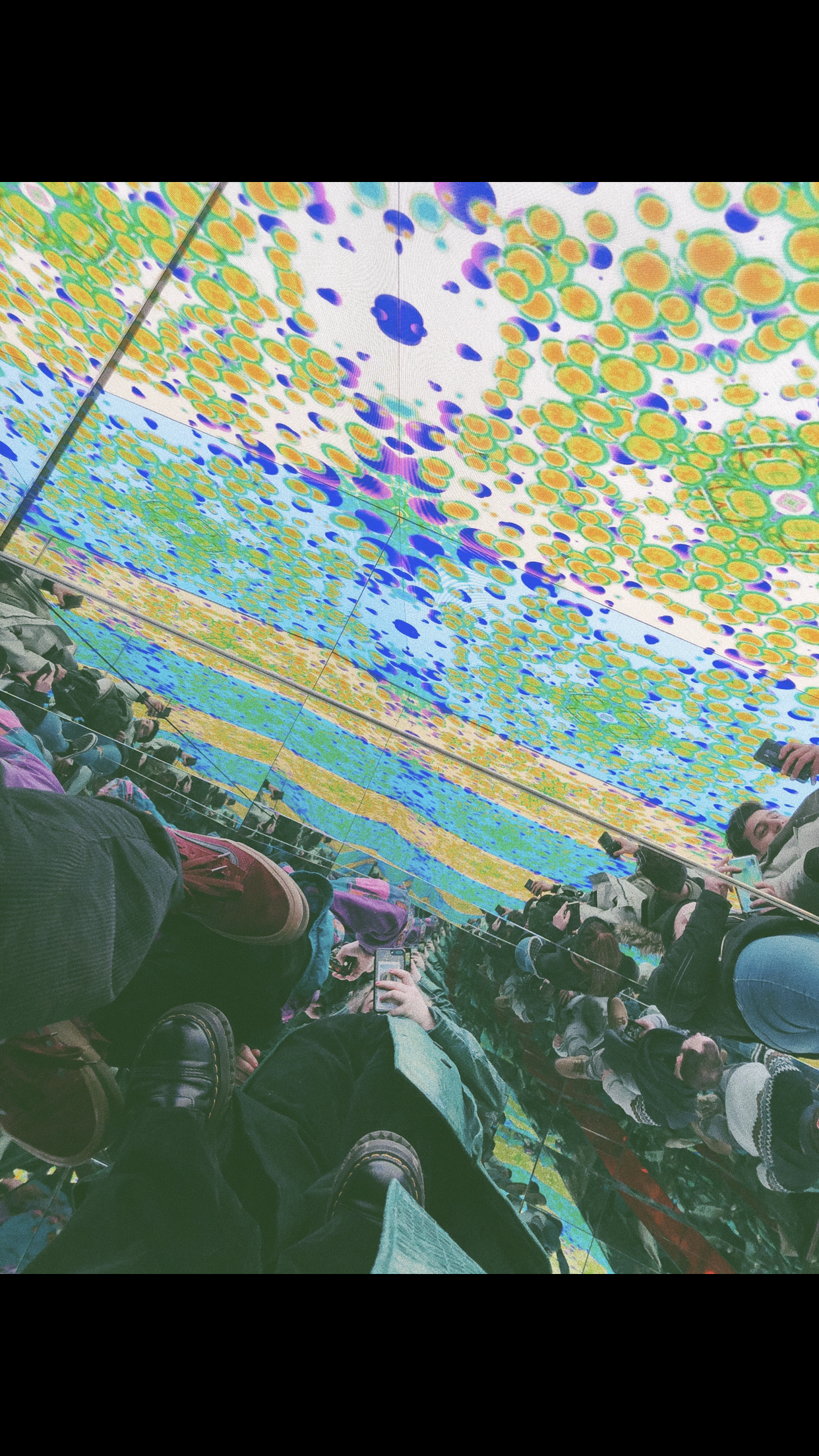
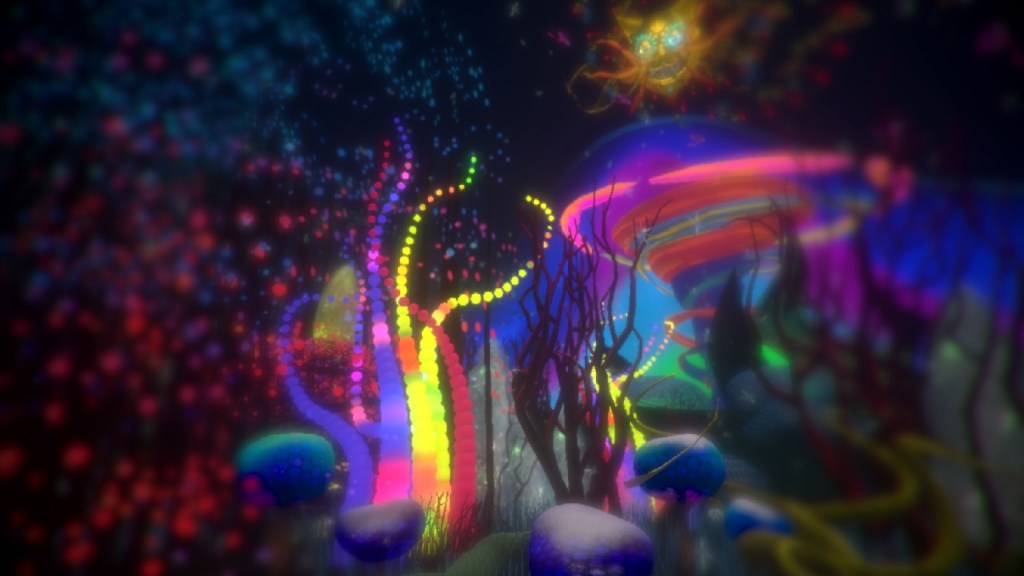
In 2016 Play Nicely created a free exhibition of otherworldly digital experiences to accompany the musical wonder.land at the National Theatre. The experience featured the music by Damon Albarn and involved the use of technology. Virtual reality was used to create a 360° landscape of wonder.land a “hypnotic garden scene”. https://www.digitalartsonline.co.uk/news/interactive-design/play-nicely-alice-wonderland-damon-albarn-wonder-land/#4

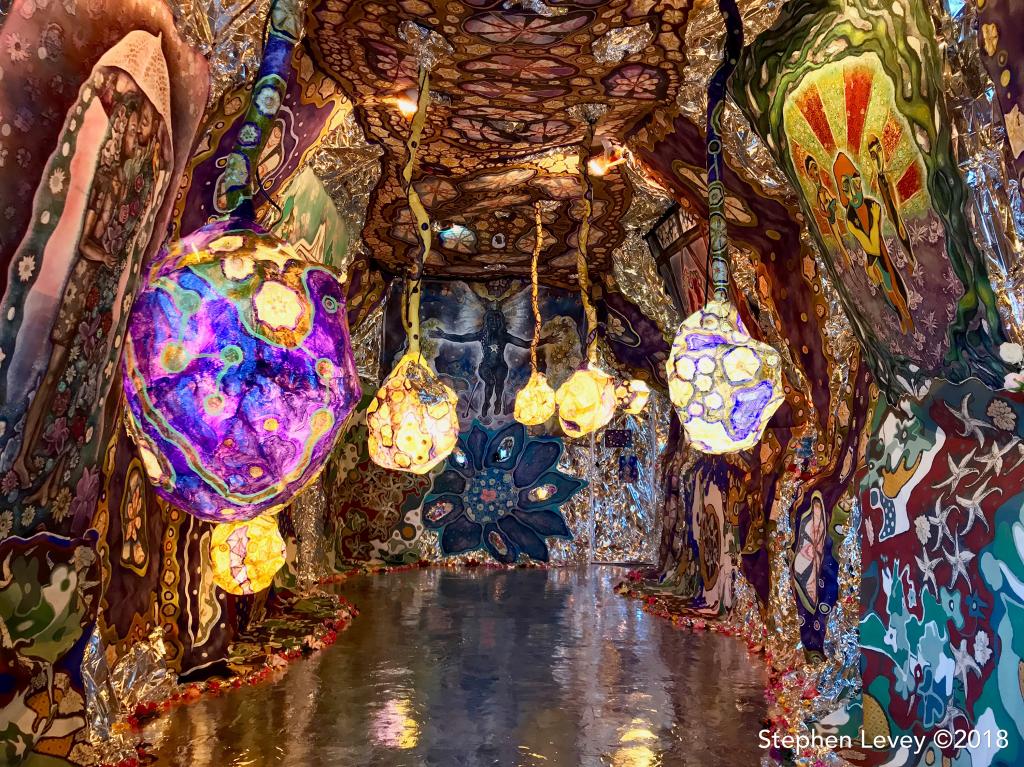
“Stepping inside of Before You Were Born is an otherworldly experience. The installation’s biological shapes feel cozy, welcoming, and alive. To create the installation, which the gallery describes as “a floor-to-ceiling interactive psychedelic textile cave,” Shapiro screen-printed, sewed, and painted individual panels of fabric, and then connected them together. The panels cover the gallery’s walls and ceiling, spilling onto the floor. Custom-designed light fixtures, also made by Shapiro, hang from the ceiling.” https://www.lamag.com/culturefiles/step-inside-otherworldly-psychedelic-cave-1000-hours-making/.

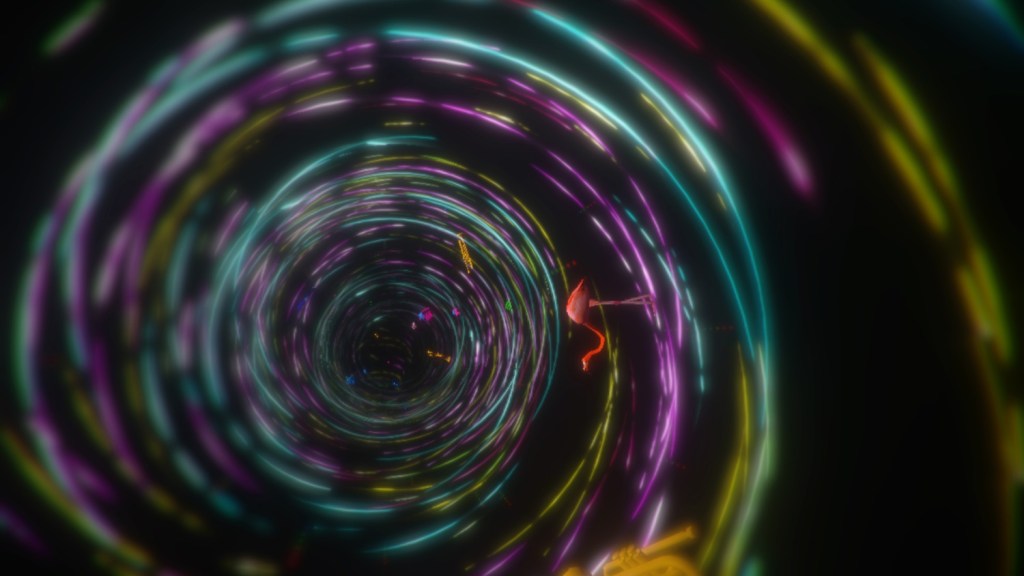
Another other worldly piece made using VR technology,
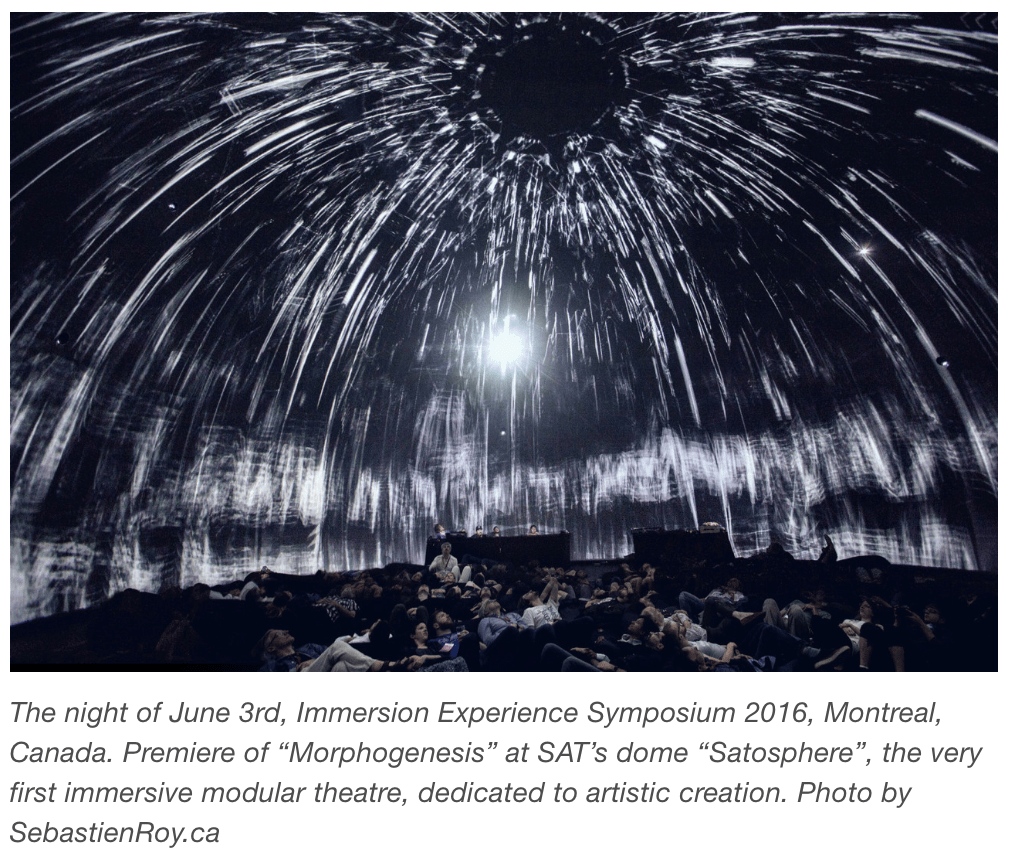
Morphogenesis 
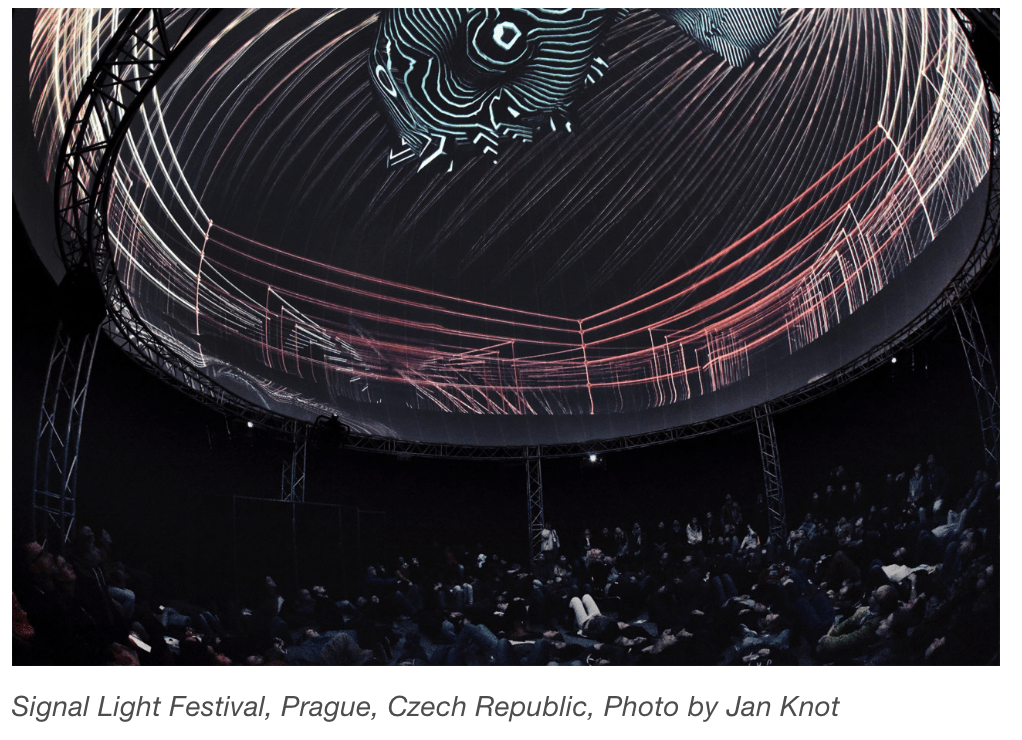
–a  virtual reality art installation. “an audiovisual journey through different planes of the digital and physical universe”  https://design-milk.com/morphogenesis-otherworldly-virtual-reality-experience/

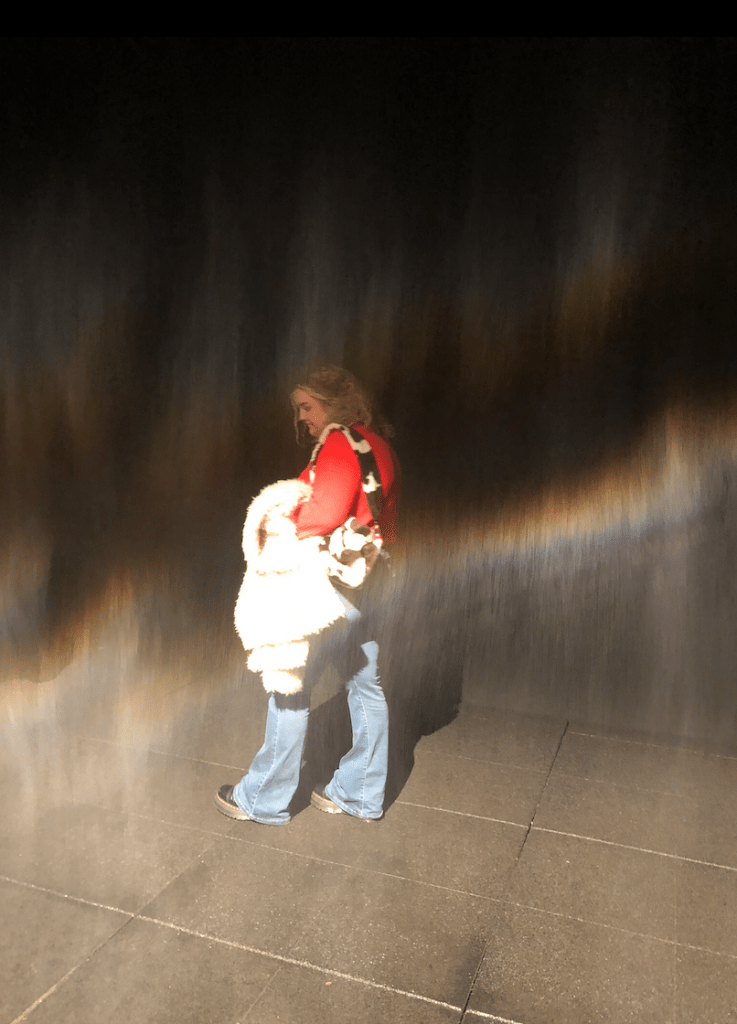
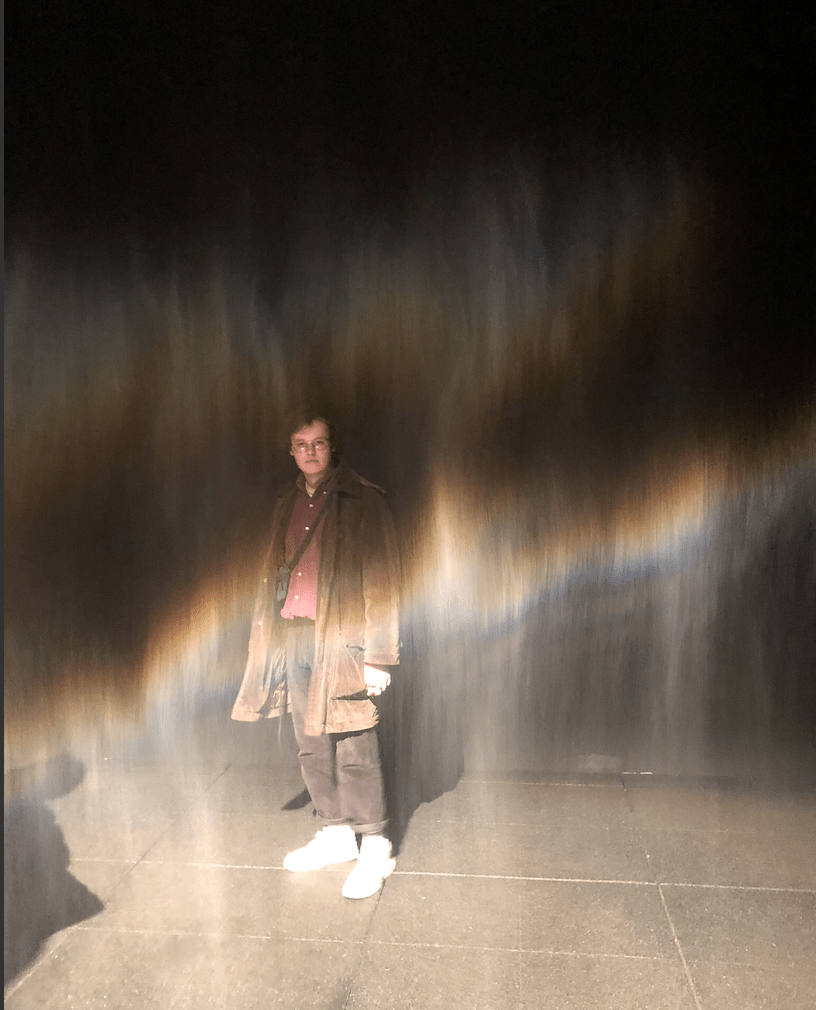
Olafur Eliasson exhibition at the Tate. Specifically Beauty “consists of a single spotlight illuminating a section of perforated tubing. When water is pumped through the tube, thousands of tiny water droplets cascade out, producing a curtain of mist, which then reflects the light to produce a rainbow.”

https://www.theartstory.org/artist/eliasson-olafur/artworks/

https://www.tate.org.uk/whats-on/tate-modern/exhibition/olafur-eliasson

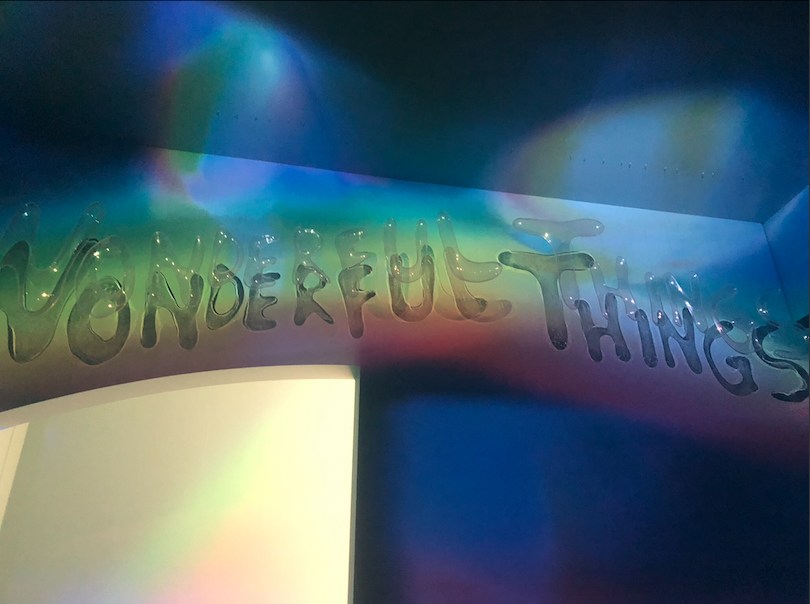
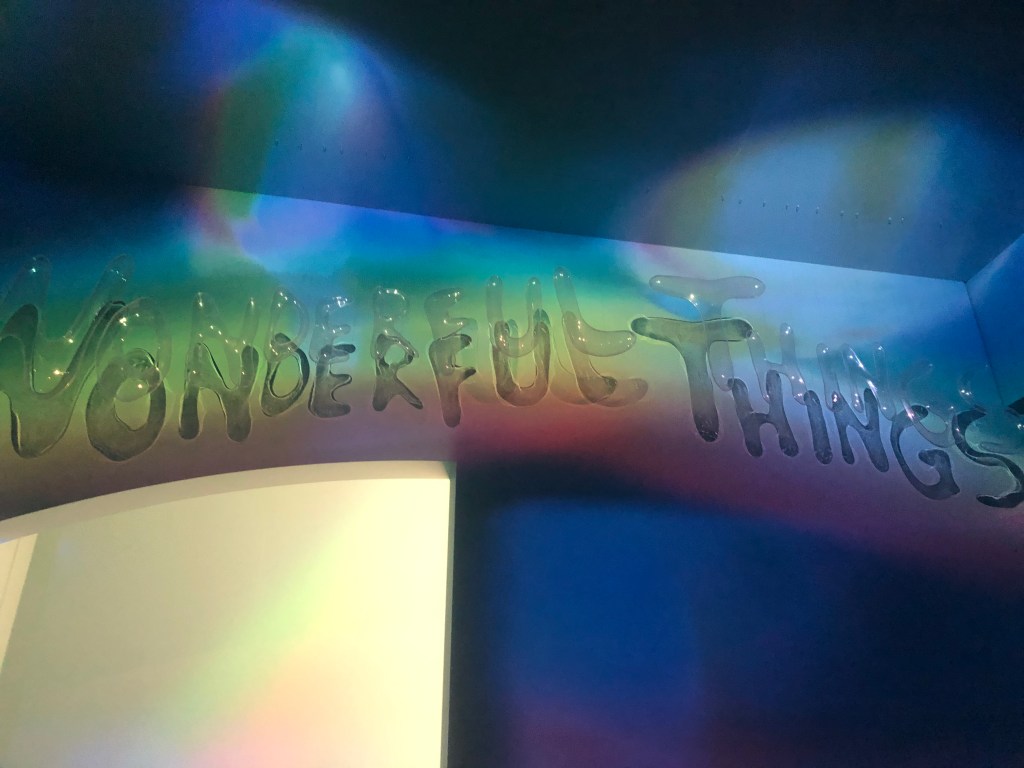
Tim Walker Wonderful things exhibition, discussed in case study 2 blog post.

Case Study 2 -Tim Walker Wonderful Things

Tim Walker is a British fashion photographer who makes work for Vogue, W and love magazine.[1] Tim Walker describes his work in a biography on his website as “Extravagant staging and romantic motifs characterise his unmistakable style.”[2] The guardian also describe Walker’s work as “whimsical, fantastical aesthetic…often exists in a surreal realm somewhere between a dream and a nightmare. The scale is off, or the colours are psychedelic…”[3]

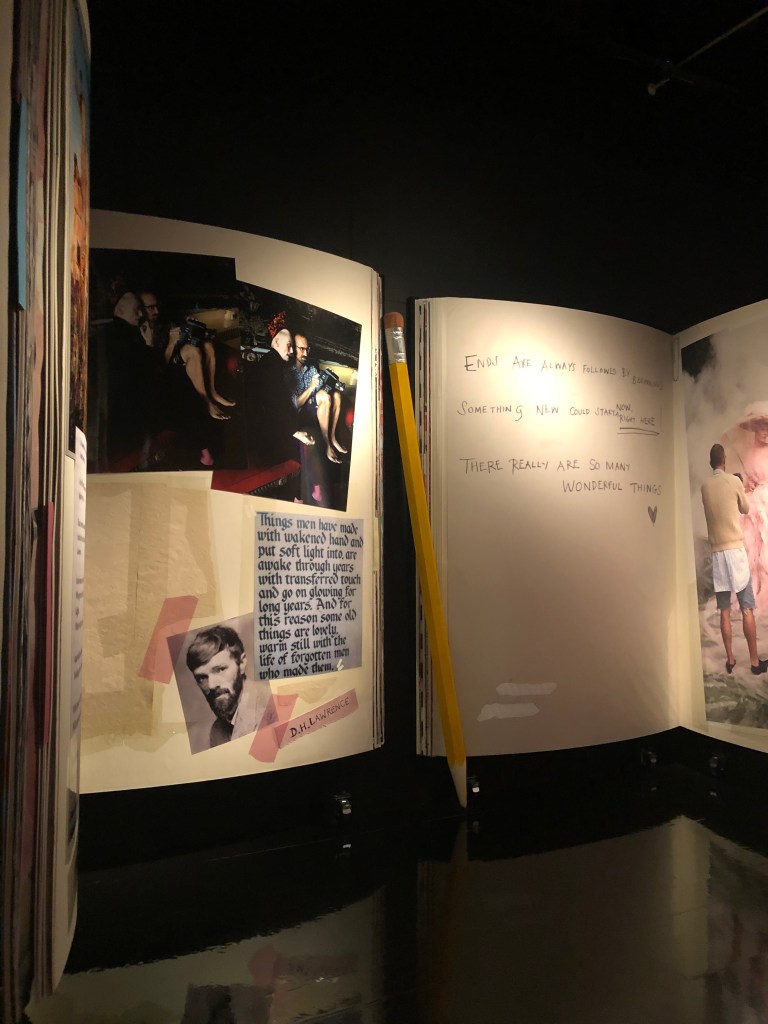
 In 2019 the Victoria and Albert Museum in London hosted Tim Walker: Wonderful Things exhibition displaying Walker’s work and paying homage to his career which spanned over two decades. The exhibition was curated by Shona Heath, a long-term collaborator of Tim Walkers. The exhibition featured 300 items as well as new work inspired by objects in the V&A selected by Walker. The V&A website describes the exhibition as exploring “…the creative process of one of the world’s most inventive photographers, through his pictures, films, photographic sets, and special installations.” Susanna Brown, Curator of Photographs at the V&A, worked closed with Walker and says “The exhibition features 10 distinct worlds, each with their own soundscape, in which he weaves together all the different threads. There is a narrative in his work, he’s a conjurer, and he conjures up scenes of make-believe.” 

This exhibition was inspired by work made by Tim Walker in the past. Rooms of the exhibition transform you through lighting, space, sets, costumes and atmosphere to almost bring you into the world of the images created by Walker. Both Walker and Heath say they are inspired by their experiences of growing up in English countryside and fairy tales. These inspirations connect them, among other things “we shared a love of many things, including photographic influences and children’s book illustration…” [4]   

Tim Walker has previously alluded to be inspired by objects saying “Each shoot is a love letter to an object, sometimes several objects” [5] which translates in the V&A museum’s commissioning of him to create several new images inspired by their own archive of artefacts and objects. There is an entire room in the exhibition with images of a shoot inspired by …. Shona Heath also worked on the shoot and explained her own of collecting of items from a variation of fabric shops and even Poundland to customise and involve in the projects. The exhibition is in connection to be inspired by objects; getting its name from the quote of the awestruck archaeologist seeing the glittering contents of Tutankhamun’s tomb in 1922: “wonderful things”.[6] The glittering contents of the V&A working similarly to produce work with Tim Walker.

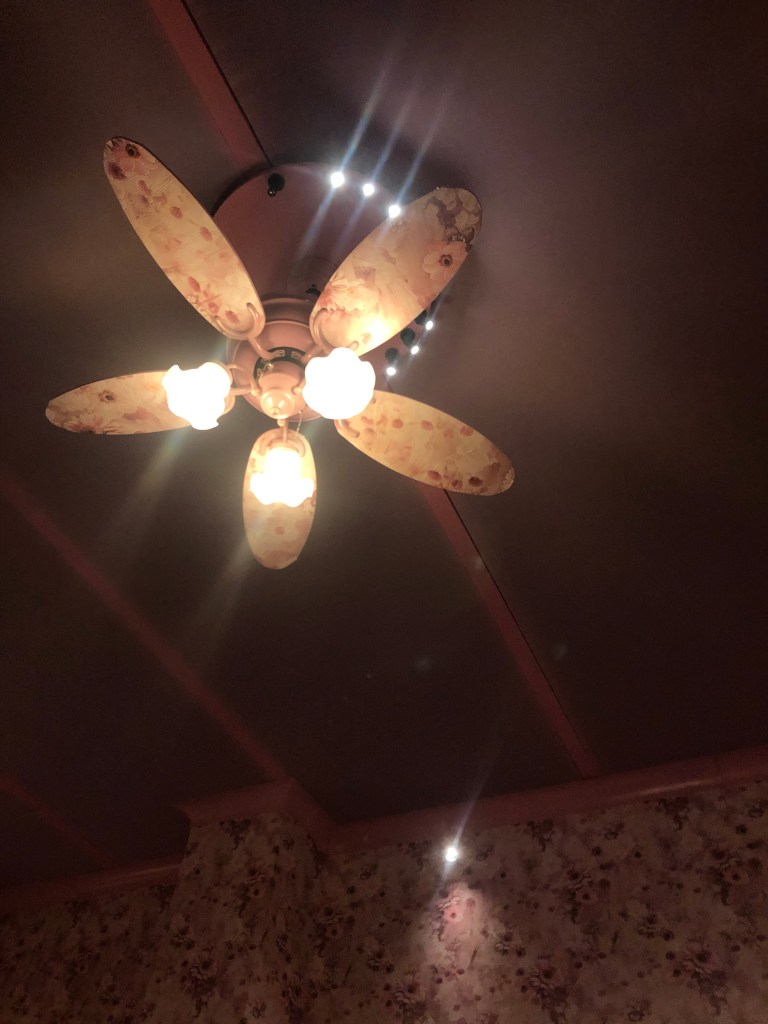
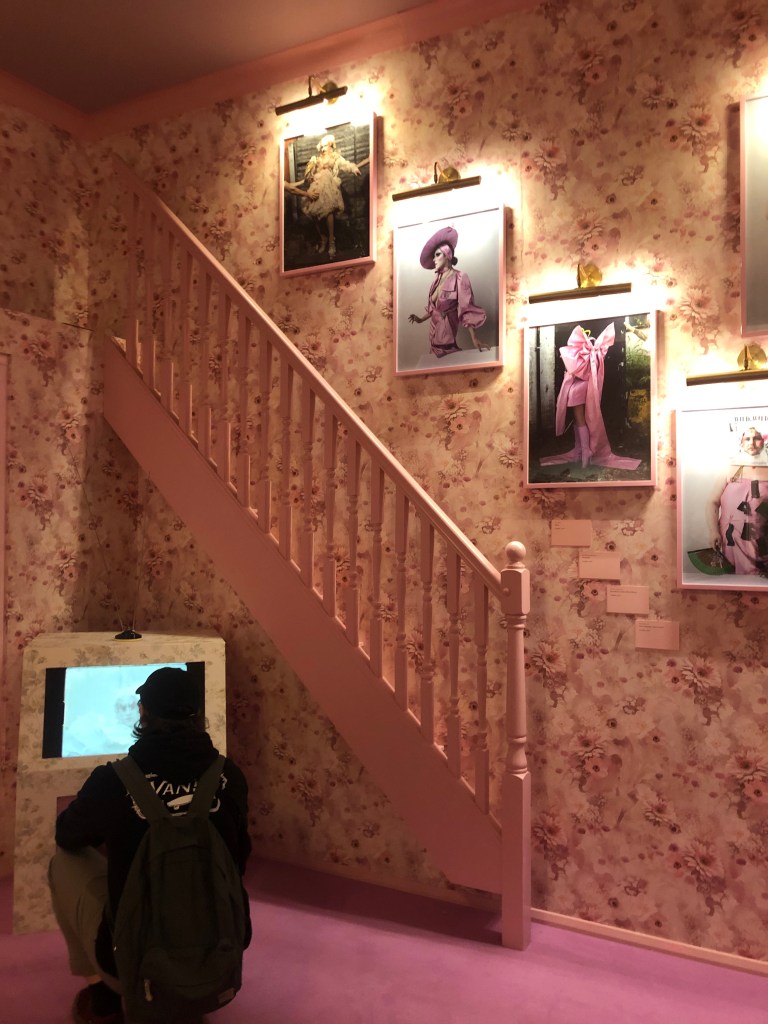
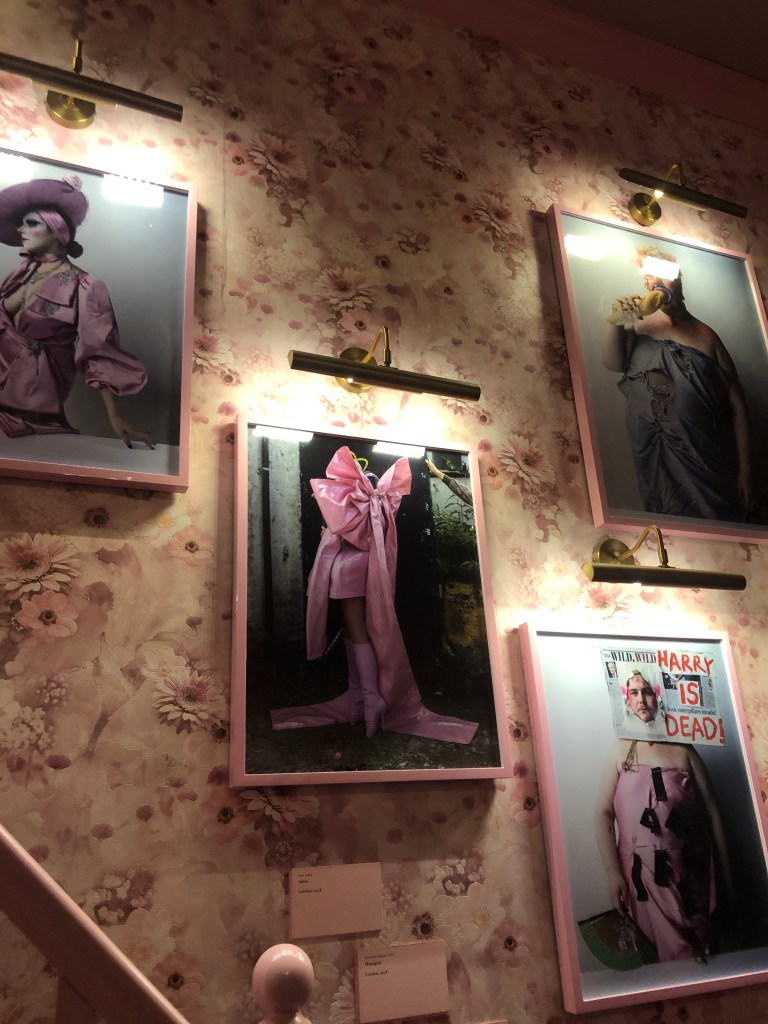
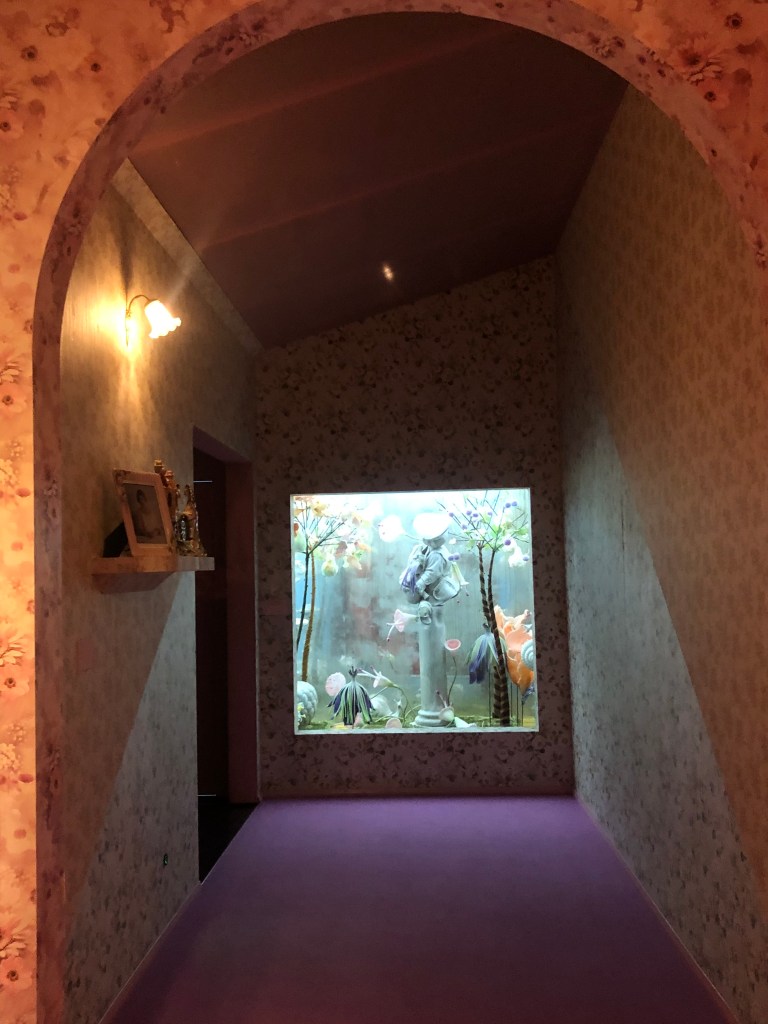
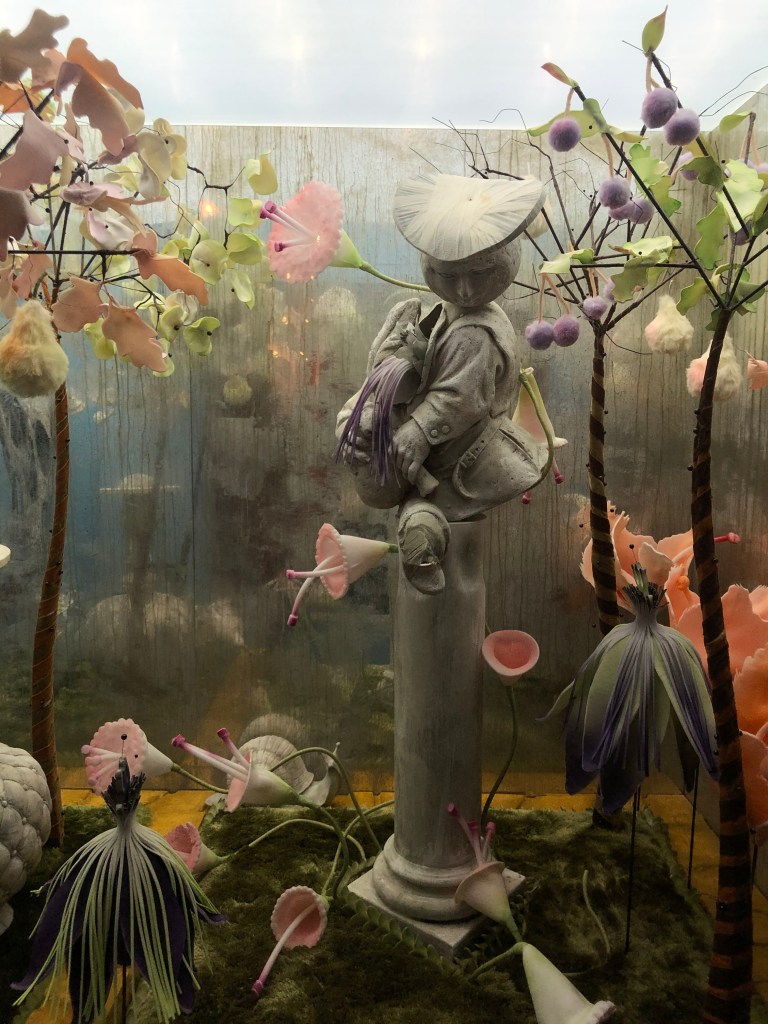
The work explored a range of content through the different images displayed and placed in separate and distinct spaces or worlds. The exhibit Box of Delights was a series of images inspired by a 17th-Century embroidered casket and a court mantua from the museum collection. The room created to hold these images resembled a “chintzy sitting-room”[7] with floral pattern wallpaper and pink carpet. It then lead to a glass case displaying the ‘secret garden’ used in the shoot for some of the images. Heath explained the world of the images as about the flamboyance and hardship of being transgender “a young man brought up in a [British] northern working-class world, and feeling caged like a butterfly; he then flourishes and shows his true colours…” The exhibition touches on and subtly explores other modern issues through Walker’s images as well as the set pieces that make up each room.

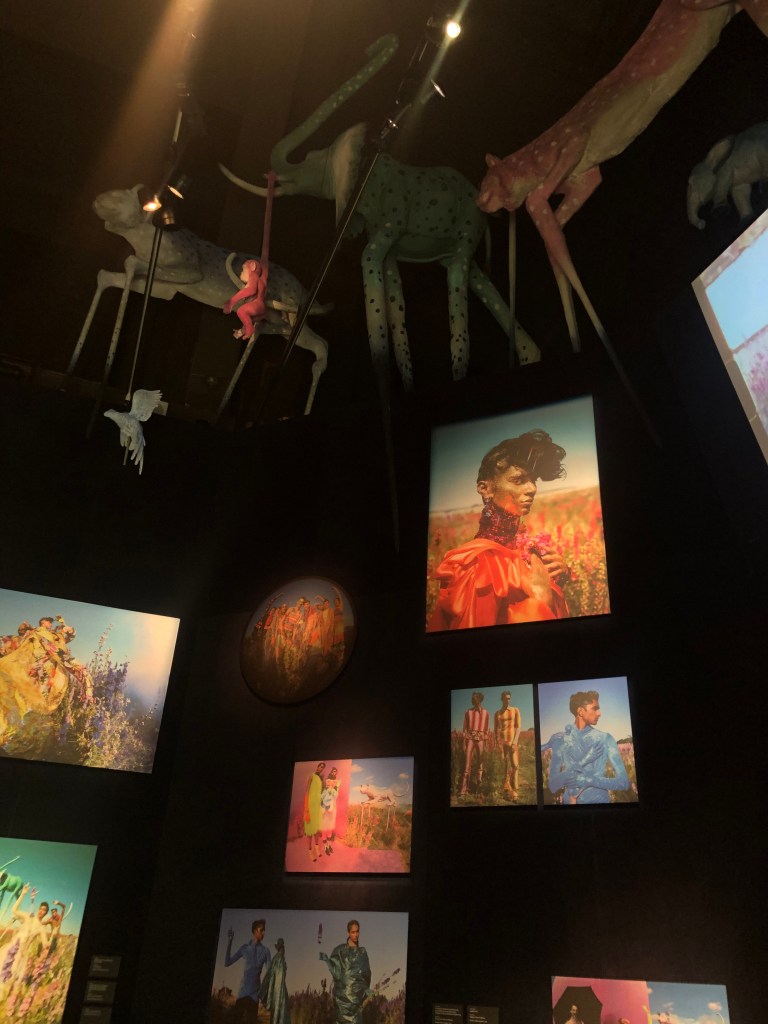
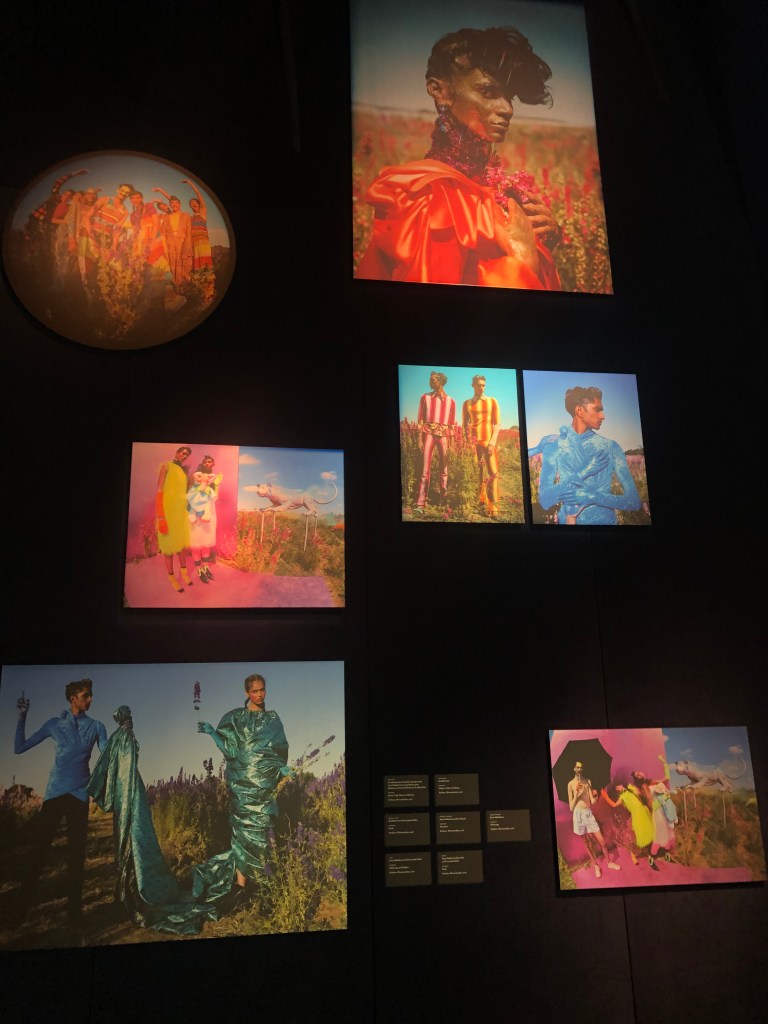
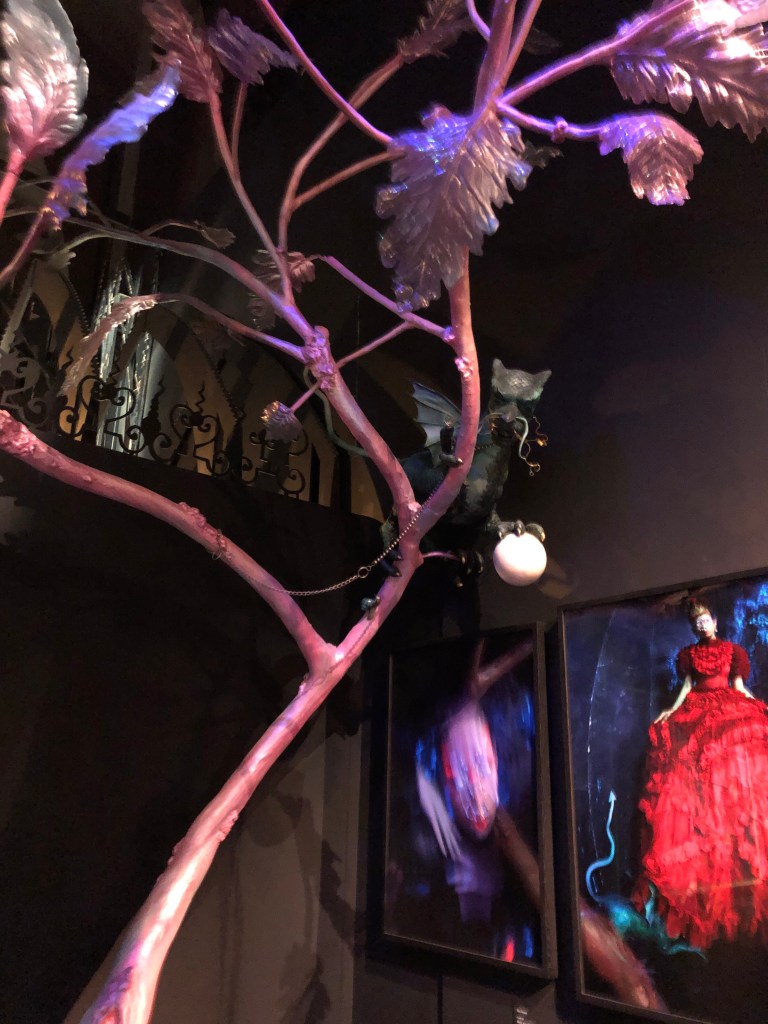
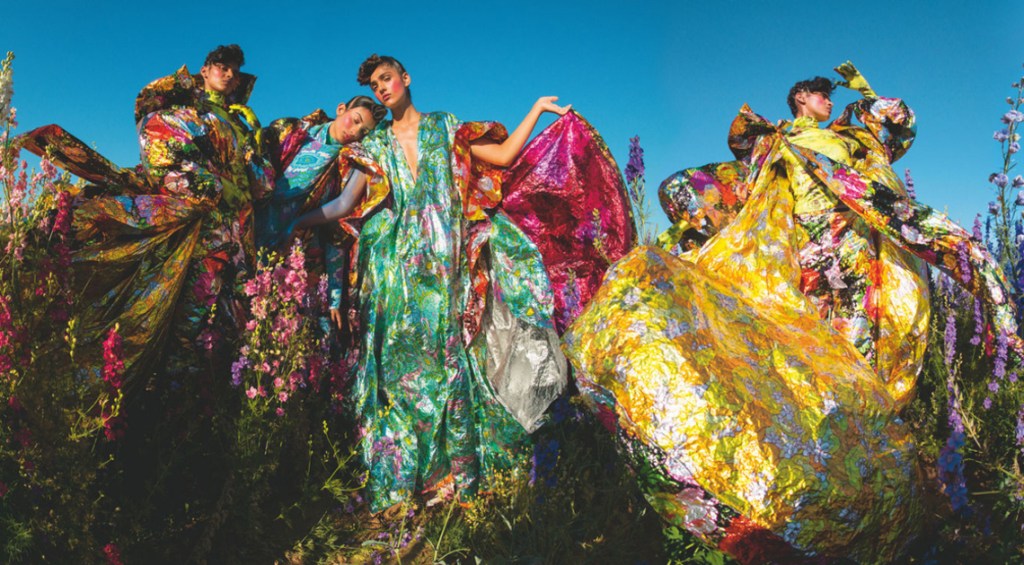
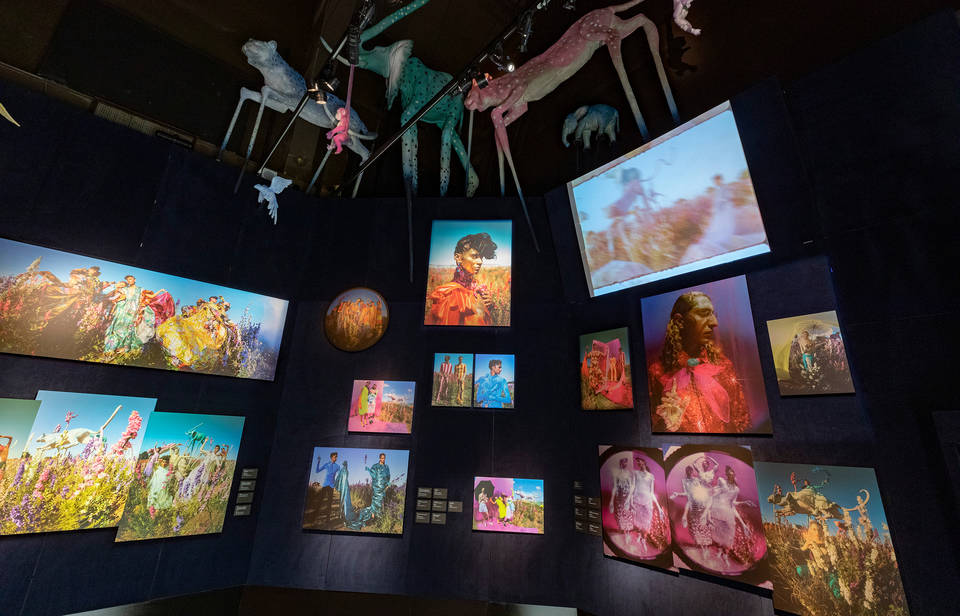
Walker insists on a team of people contributing to make this work and this is clearly conveyed in the In Cloud 9 shoot which was inspired by a “16th-century watercolour-and-gold painting, Krishna and Indra, from the Mughal Empire.”[8] The images are of models of Indian, Pakistani and Bangladeshi heritage in the bright, sunny, English countryside. The Models were said to have played a creative part in the making of the image and Editor-in-chief of British Vogue Enninful discussed the image as “culture that’s not just Indian, Pakistani or Bangladeshi, but also British, a new Britain you could say.”[9] The high ceilings of the room are decorated with hanging tall animal figures from the shoot and the glowing images displayed project this new culture of Britain. The room emits a psychedelic feel, the vivid colours in the images that are also in the large animal set pieces against the black room.

The photography is heightened, the task of absorbing an image is fully achievable in this exhibition as the use of set pieces and lighting in each room contribute to transcending you into the fantastical worlds of the images.

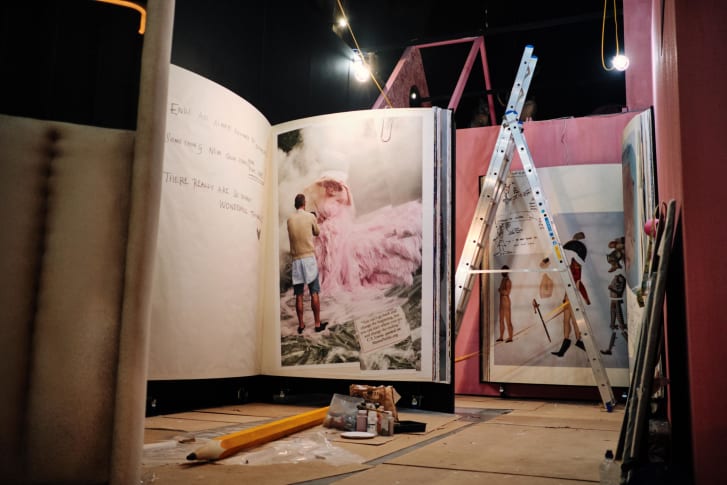
The Fantastical aesthetic in images created by Walker and mimicked in the rooms created in the exhibition inspired me to consider how I want to create and control atmosphere in a space. The environment of the image created through Heath’s set design pushed me to explore other unexpected materials particularly customising items with paint that glows under UV light or to play with the scale of a prop like the floor to ceiling height scrapbook at the end of the exhibition. I am keen to explore how scale of props can affect perception and atmosphere within a space with lighting and other elements.

The exhibition feels relevant to the work I want to make not just aseptically but also the incorporation of modern issues like transition into a ‘new British’ culture and the difficulty of being transgender felt important to the work but specifically how they were communicated subtly.    

I was particularly inspired by how atmosphere is created and how the rooms were made to feel shifting into alternate realities. In my own work I also would like go attempt to design a space that similarly feels like somewhere to become inspired and explore creativity.

I felt this exhibition was able to inform my own piece as it is focused on a body of work from an artist as well as objects that inspire creativity and the result of these new inspirations. A focus on the process of creating and being transformed into the world of the creative influence is something I would like to explore and emulate in my own work. My own work will respond to my experience of this exhibition not only through exploration of the methods used by Tim Walker and Shona Heath but also the aesthetic choices made to transform the rooms into the fantastical worlds of the images.


[1] https://www.independent.co.uk/life-style/fashion/v-and-a-museum-tim-walker-fashion-photos-exhibition-tickets-photographer-victoria-albert-a8833146.html

[2] https://www.timwalkerphotography.com/biography

[3] https://www.theguardian.com/global/2019/sep/15/tim-walker-fashion-photographer-interview-theres-an-extremity-to-my-interest-in-beauty

[4] Shona Heath quoted in http://www.bbc.com/culture/story/20190919-the-bewitching-fairy-tale-world-of-photographer-tim-walker

[5] http://www.bbc.com/culture/story/20190919-the-bewitching-fairy-tale-world-of-photographer-tim-walker

[6] http://www.bbc.com/culture/story/20190919-the-bewitching-fairy-tale-world-of-photographer-tim-walker

[7]

[8]

[9]

Representations of mushrooms in other works

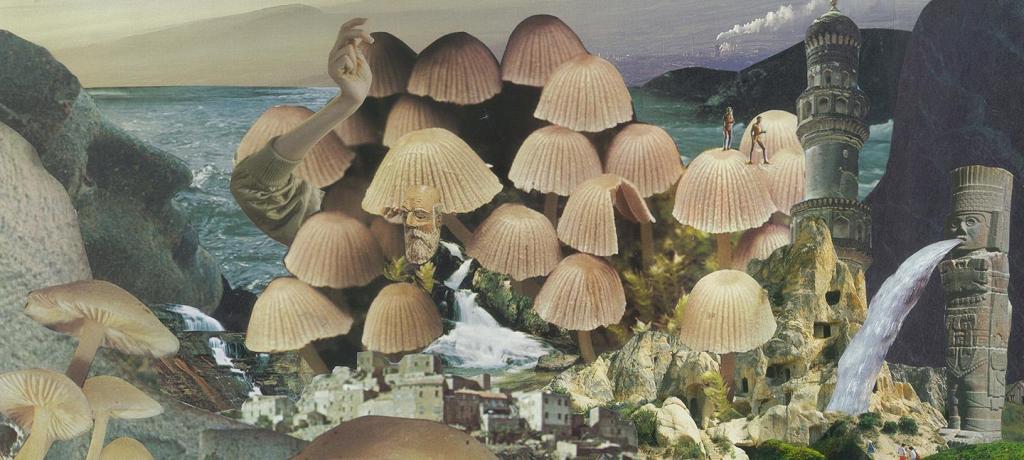
I have found a recurring link through other performances and works I have researched for my project: An idea that mushrooms represent something to do with natural growth and being, connecting us as people and to the earth. This isn’t specifically in connection to the use of psychedelic mushrooms which are commonly discussed in relation with their supposed ability to connect people with nature. Mushrooms are being discussed in work in relation to current issues of sustainability, the destruction and creation of our natural world and our public performances in shared spaces. This connection may seem vague however I think it is an interesting way to consider representing my project’s aims. Mushrooms are connected to growth and relate to the debates I am exploring about creative growth as well as the natural element which relates to the drug or herb debate.

In 2018 YAO LIAO organised “BY MUSHROOMS”

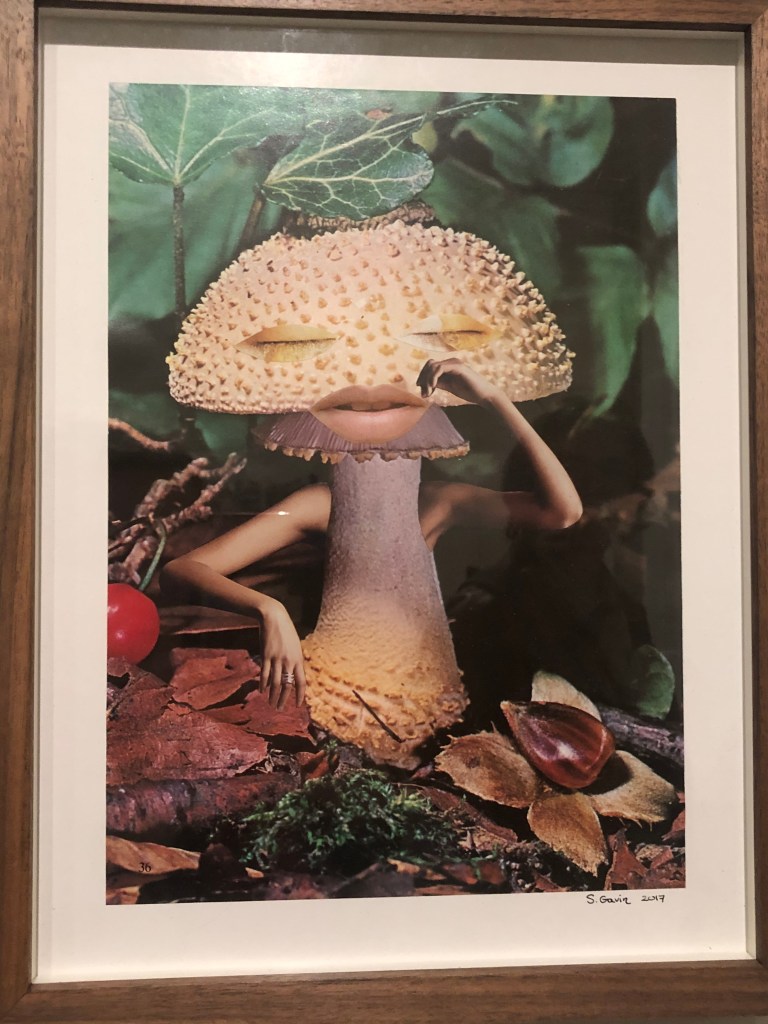
The mushroom head project which explored performance in public spaces. “It embraces the context of the mundane and transcends it into a spectacle by portraying a surreal image of mushroom heads sitting on human bodies. It requires neither a stage nor a rehearsal; the project engages the public in the most unexpected way, walking the audience back into their daily life and celebrates the performativity of being.” http://www.yaoliao.co.uk/by-mushrooms.html

The Mushroom at the End of the World: On the Possibility of Life in Capitalist Ruins is a book by Anna Tsing, a Chinese American anthropologist. The book explores the matsutake mushrooms that can only grow in human-disturbed forests and the globalized commodity chains that exist around it.

https://www.academia.edu/40320405/The_Mushroom_at_the_End_of_the_World_-_Anna_Tsing

https://press.princeton.edu/books/paperback/9780691178325/the-mushroom-at-the-end-of-the-world

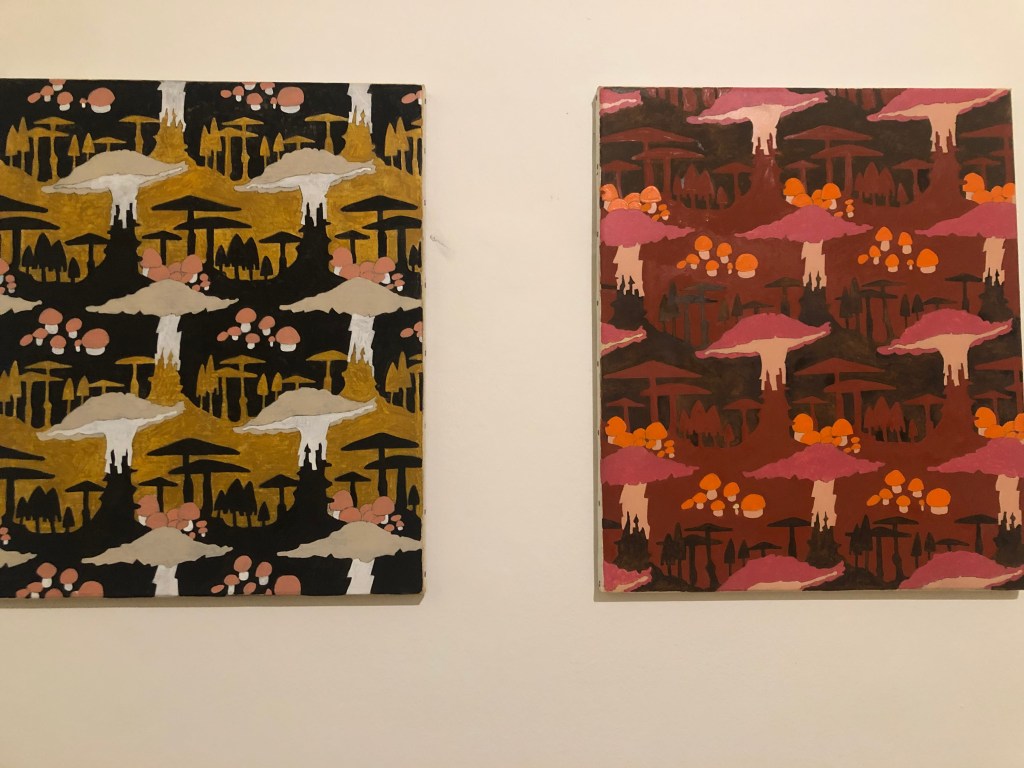
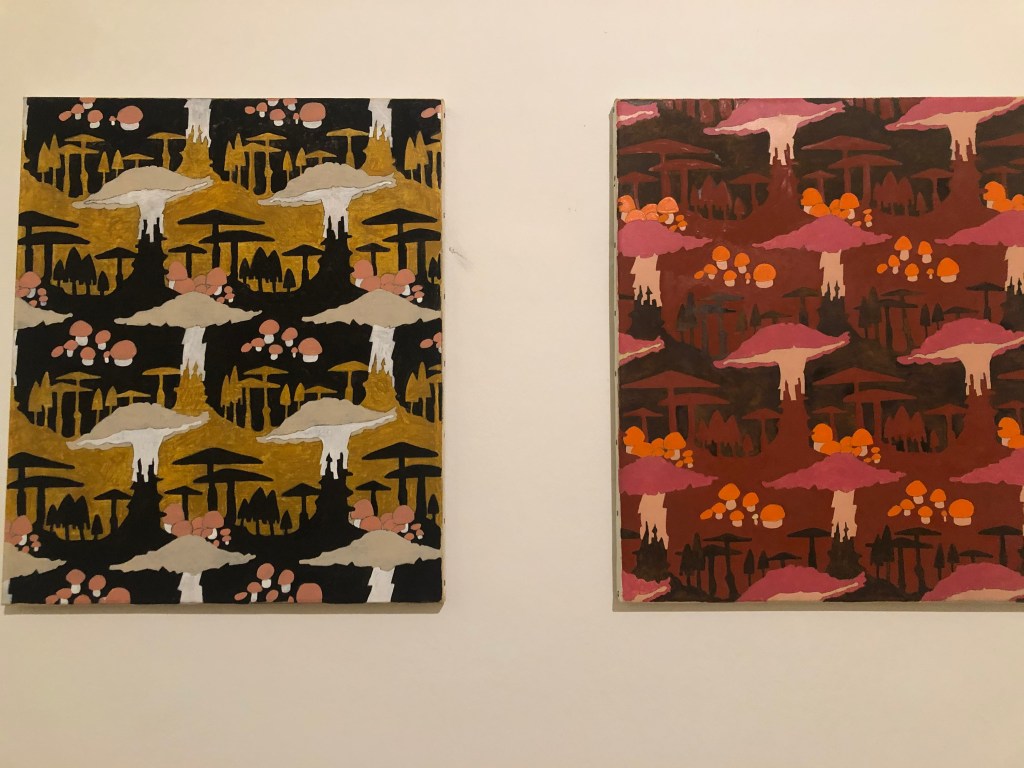
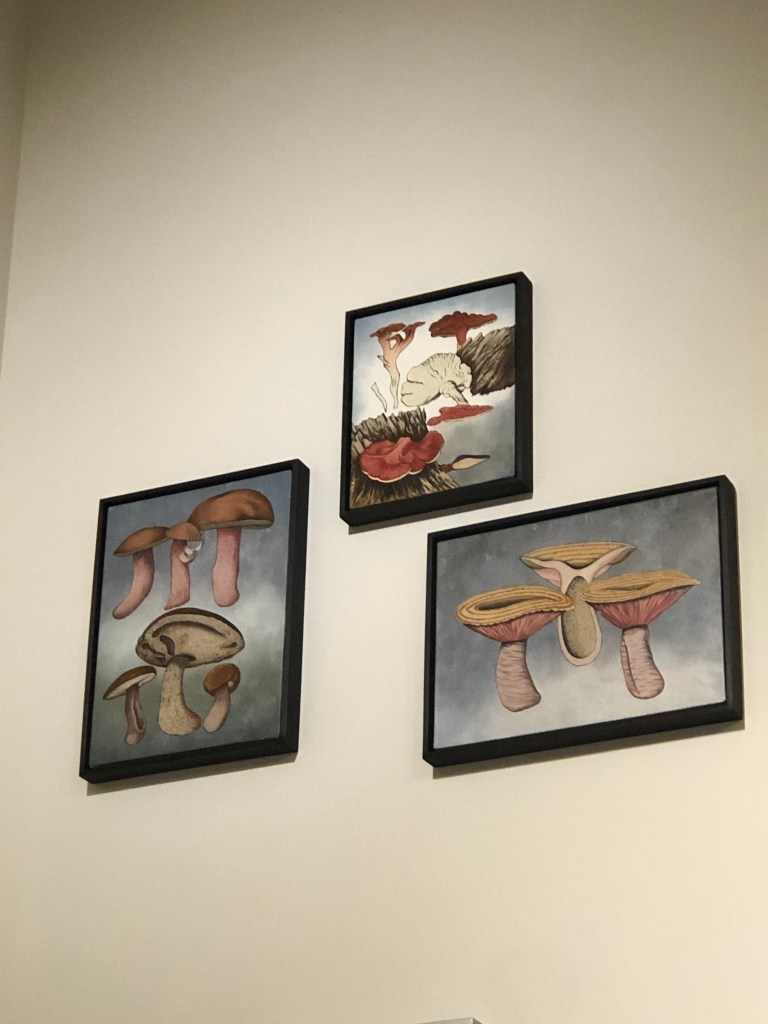
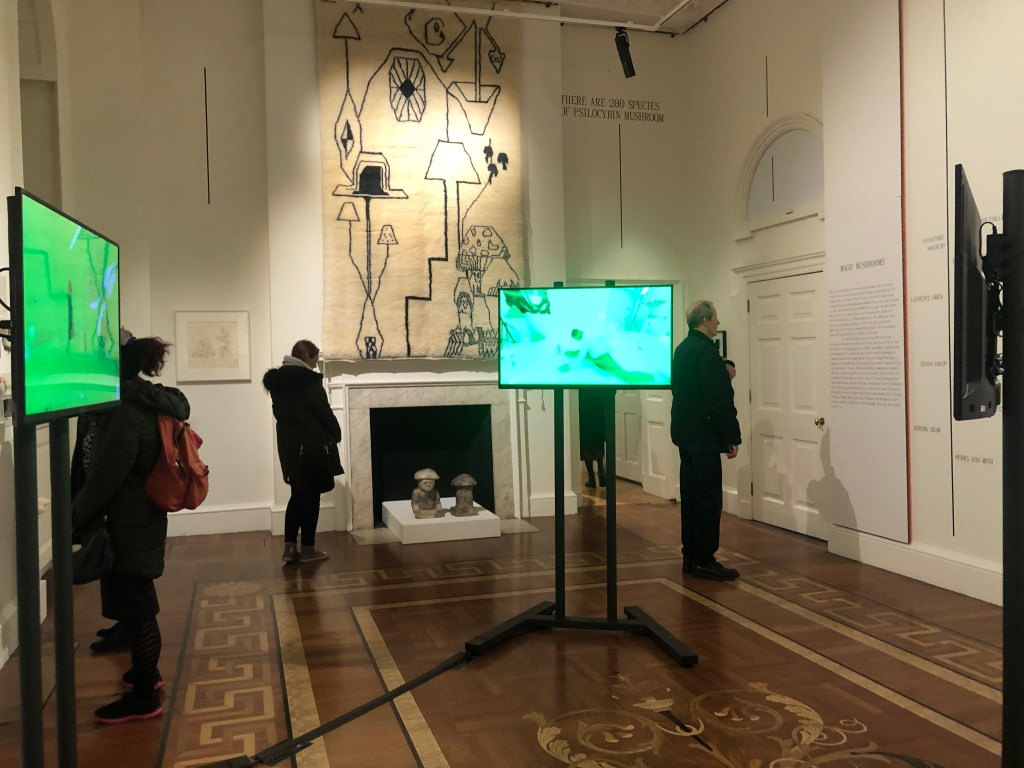
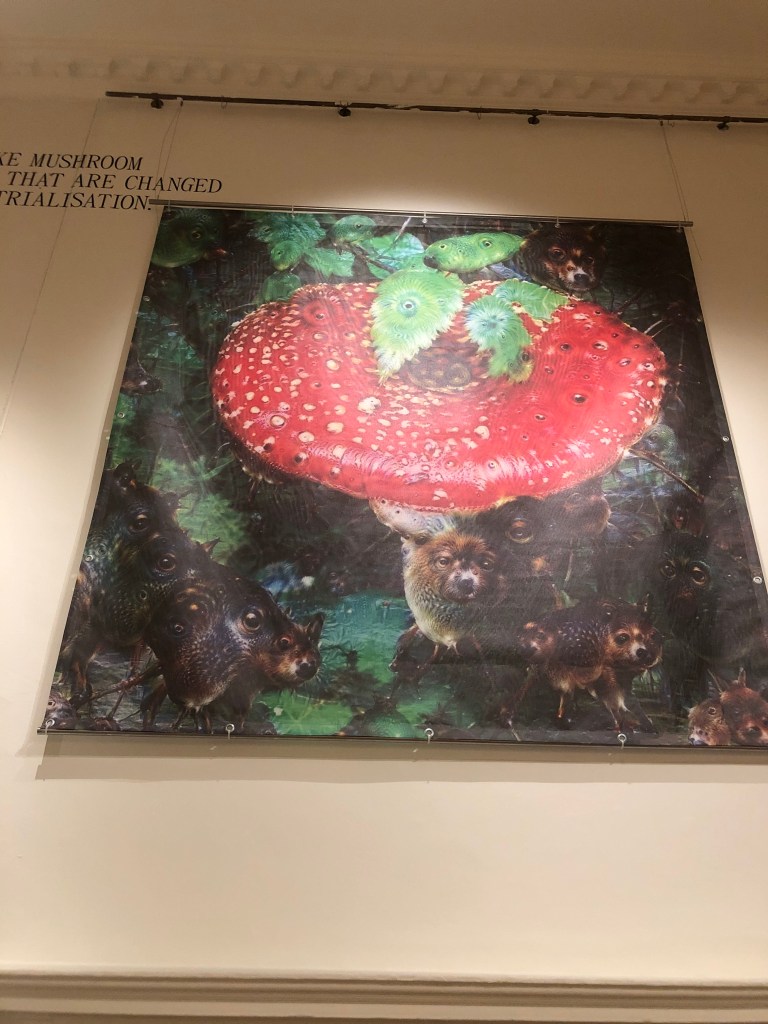
Mushrooms exhibition in Sommerset house drew attention to mushrooms as some of the first cells to exist and grow in the world, something that is a part of all of us as we are a product of evolution from this plant.

Post work-in-progress Experimenting

I wanted to focus more on one of the contrasts I had found interesting to explore through my work in progress video.

Most prodrug campaigns are focused on the ‘natural’ occurring plants and substances in the earth with active ingredients like cannabinoids or psychoactive qualities. The debate of herb or drug and popular phrase “it’s just a plant” is something I want to further explore. The concept of certain drugs seen as ‘natural’, an attempt to connect with nature and with healing properties seems interesting considering their illegality.

https://www.nationalgeographic.com/science/2005/06/the-marijuana-debate-healing-herb-or-dangerous-drug/

I wanted to make another video that didn’t consider the nostalgic readings of a culturural time or the process of taking/being influenced to create. I instead just wanted to see how much I felt my project could connect to the ‘natural’ and the herb vs drug debate.

Work in Progress video

Originally when creating the video I had wanted to represent a transformation, like someone accessing a new part of themselves, ways to do things and ways to be creative that supposedly happen to people after drug use. I was also inspired by the different sort of dilemmas or contrasts I had been considering during my work on this project. I didn’t want to romantise drugs but wanted to represent the possibility of growth within a person or positive use of natural substances (plants, mushrooms). I layered these clips with ones that represented stunting growth (cutting flowers) to suggest the negative implications of drug use or negative conceptions. I also contrasted the euphoric and dreamy clips with real advertisements and video footage from times in the past, when drug culture was different, that people feel nostalgic towards. The video continued to be edited and meanings shifted. Inspired by Mark Leckey’s videos, I wanted to show nostalgia for a time in history as recognisable to everyone for many different social reasons and not just reminiscent of a more ‘free’ lifestyle or drug culture. This was through the stark transitions into rave clips in the 80s as well as the advertisements for cars etc. I also used clips of myself, alone against a background of tapestries and making use of the materials we had access to in the house for the creation of the video. I was filmed putting on make up (styling myself) and painting, tasks I feel could be influenced by a surge in creativity as a result of drug use as well as art forms I feel have been influenced by drug culture either in recent years or history.

Through the video I made use of editing and specific colours, as well as the content already in the clips, to create an atmosphere. The song, space song by Beach house also worked to contribute to this. I felt the song worked interestedly against the sudden changes into audio from the outside footage found online.

Feedback and responses:

Cara

  • felt like a music video. an art form connected to musicians, who are notorious for drug use to influence creativity.
  • Layering and close ups of eyes / colours worked well
  • Consider More similar shots of lips / hands. (how you consume/handle drugs whilst also being the body part used when you create things)
  • Liked the quick chop and change to advertisements and connection to wider society.
  • The Woodstock clips at the end could have gone on longer, nice to look at 
  • Growing mushrooms, spiritually growth/ artist grown symbolic? 
  • Colours were representative of theme. Could be more heightened, make colours more saturated and vivid like visions induced by drug taking.

Martina

  • felt like a mood board of feelings
  • Showing perspectives like inner and personal vs onlookers perspective of drug use. Personal was of me in euphoric state alone in my room vs chaotic group at 80s rave
  • Layering of the shots felt like a link to the psychedelic 
  • Harshness between clips and between lighting – me alone, enjoying myself and doing my own thing in contrast to fast pace clips of other people in crowds in a different time period.

Estelle

  • Close up opening shots felt like a start of music video
  • layered shots of mushrooms over background set worked really well
  • Felt like time lapse of mushrooms growing and cutting flowers, felt like progression. more shots like this playing with time like speed up or slowed down. perception of time which feels appropriate as drugs and creative tasks can feel like they over rule the power of time.
  • etherial settings
  • cutting in and out of historical/social clips could be more intense or controversial
  • into core of project could show more crazy
  • pin down narrative of the world created or offers
  • exploration as positive affects is a niche angle, play up
  • undercurrent of drugs or intoxication could involve animation or more vivid visual experience represented
  • productivity is never assumed to be a result of scenarios presented, show creative processes as important and take them up a set every time
  • creative manifestation of effects of drugs

Some Artist Inspirations

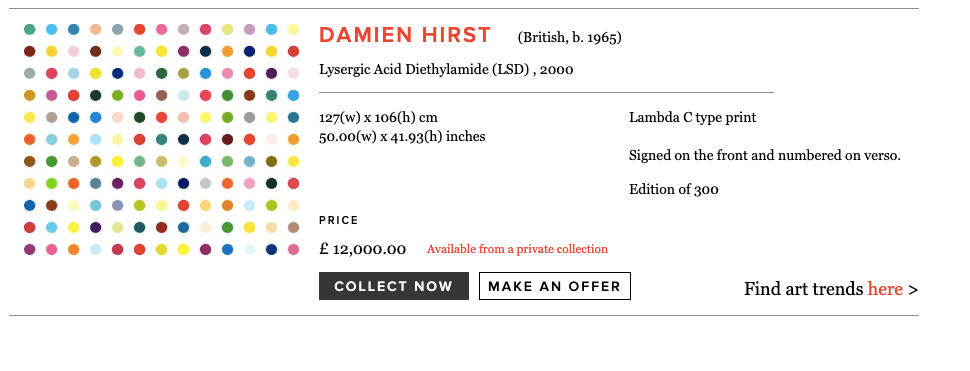
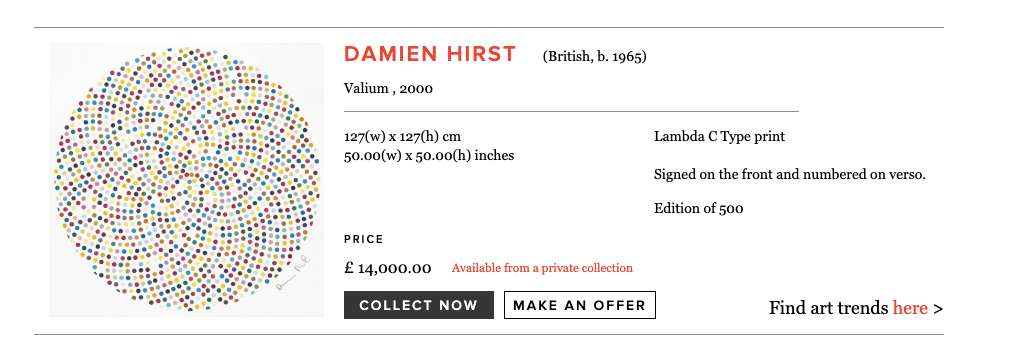
Damien Hirst / pharmacy 1992. Medicine and drugs are recurring themes in Hirst’s work as means of altering perception and providing a short-lived cure, ineffectual in the face of death. For Hirst medicine, like art, provides a belief system which is both seductive and illusory. He has commented: ‘I can’t understand why some people believe completely in medicine and not in art, without questioning either’ (Damien Hirst’s Medicine Cabinets: Art, Death, Sex, Society and Drugs, quoted in Damien Hirst, p.9).

Hirst believes that art and drugs can both heal, but that the latter can also warp or damage the way we think. https://www.concrete-online.co.uk/damien-hirst-and-drugs-in-art/

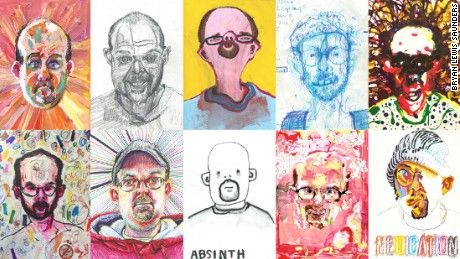
Bryan Lewis Saunders 

Created self-portraits whilst taking different legal and illegal substances. Saunders believes the drugs allow for creative stimulation and reduce self awareness. But he wasn’t proud of the experiment, claiming that he thought drugs made him look “ugly” and was actually hospitalised with brain damage.

DRUGS – UNDER THE INFLUENCE

“After experiencing drastic changes in my environment, I looked for other experiences that might profoundly affect my perception of self. So I came up with another experiment where everyday I took a different drug or intoxicant and drew myself under the influence.  Within weeks I became lethargic and suffered mild brain damage that wasn’t irreparable.  I am still conducting this experiment but over greater lapses of time and presently only take drugs that are prescribed to me by a doctor.” http://bryanlewissaunders.org/drugs/

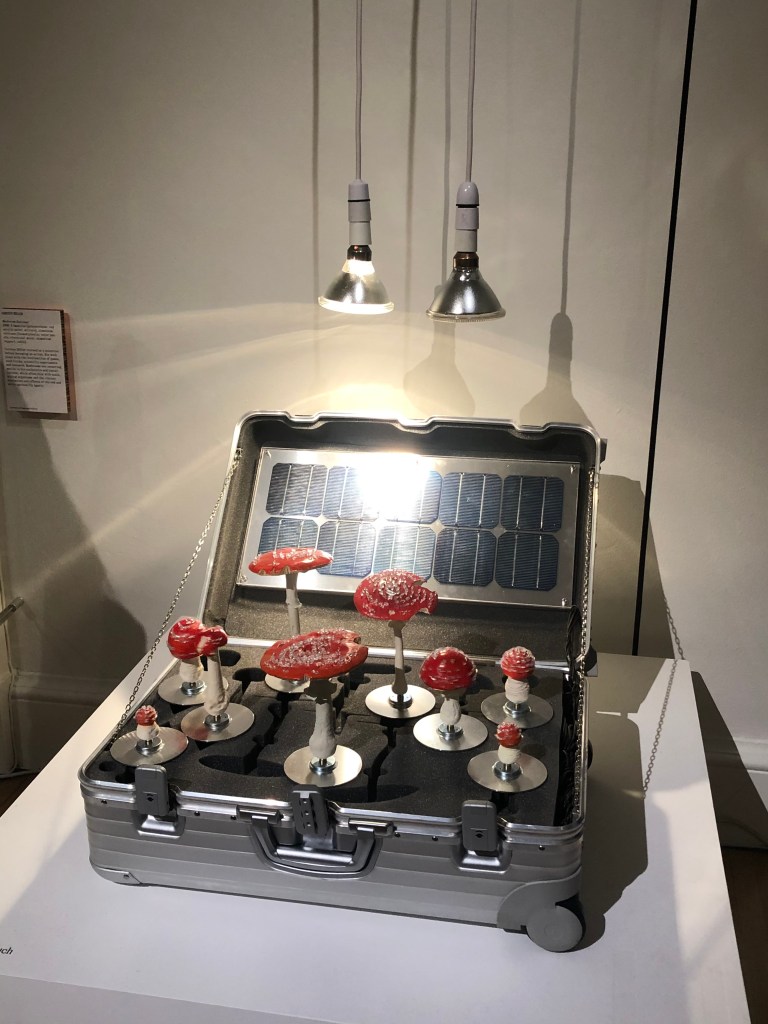
“Mushrooms with vision-giving powers” Somerset house / Mushrooms exhibition

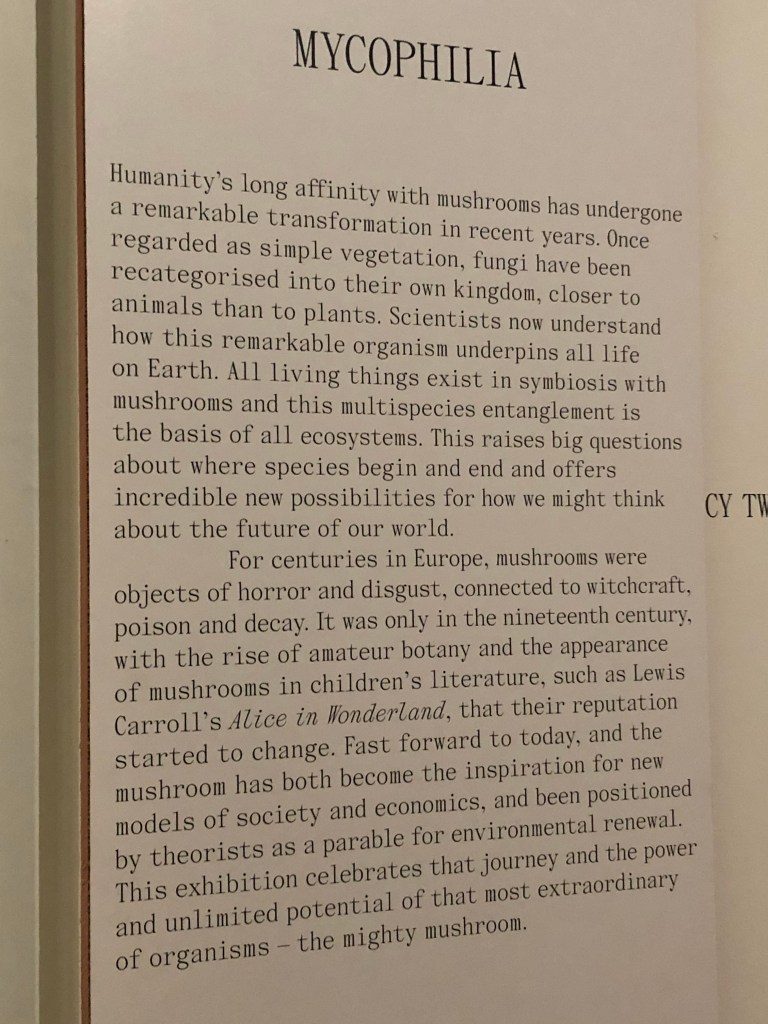
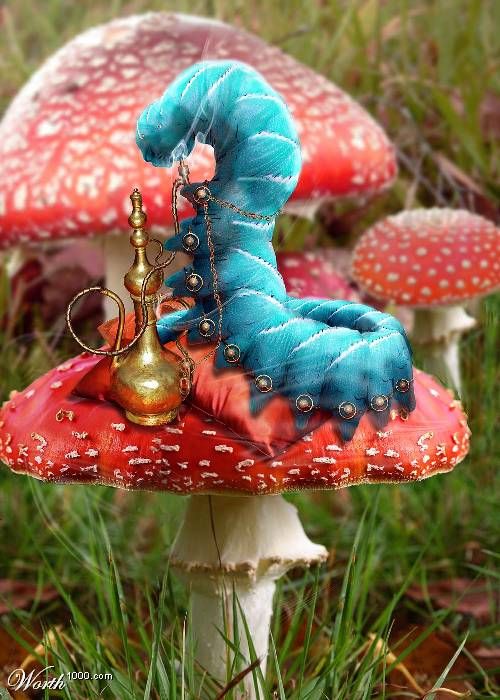
Curated by  Francesca Gavin, who says mushrooms have always been seen as “something witchy, something darker, something that’s about decay.” Highlighting the scene in Alice’s Adventures In Wonderland (published in 1865) when Alice is greeted by a caterpillar atop a giant mushroom as a “gateway moment” for mushrooms beginning to be seen as something strange but friendly in our society.

https://www.refinery29.com/en-gb/mushroom-wellness-trend

An attempt to reengage with the natural world, the short exhibition feels like it is born from millennial’s connection to nature through their houseplant obsession and how mushrooms relate to the wellness trend. It is suggested that mushrooms are to thank for the beginning of our entire world and that we all evolve from them. As well as mushrooms being an answer to modern problems; I was previously unaware of their powers in regards to oil spills and sustainability in fast fashion.

The parts of the exhibition that most grabbed my attention and I felt inspired further exploration in my project were displays in relation to consuming mushrooms for their psychedelic effects and how mushrooms are received in pop culture. Psilocybin is the naturally occurring psychedelic drug found in mushrooms. The exhibition brought my attention to the article published in 1957 in US Life magazine by Robert Gordon Wasson titled “Seeking the Magic Mushroom”.

Seeking The Magic Mushroom“.  http://www.psychedelic-library.org/lifep2.htm

The article is apparently a very ’50s example of tone-deaf cultural tourism’ however, Wasson is still credited with bringing the idea of mushrooms as more than just a vegetable to the Western world. This element of the exhibition made me curious about how I could investigate and represent the positive effects of psychedelics as cultural. Considering how sacred the mushrooms are conveyed to be to the Mexican hosts in Wasson’s article as well as in traditional Chinese medicine and other asian cultures.

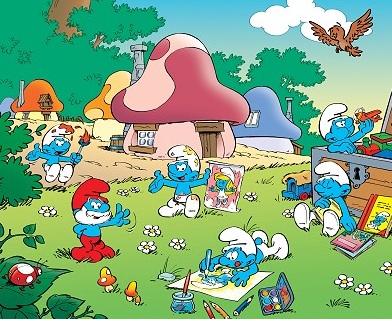
The exhibition also gave me space for thought about mushrooms in pop culture, aside from the influence on creativity and specifically in music, which I have been mostly focused on so far in my project. Considering our culture as either mycophobic (mushroom phobic) or mycophilic (mushroom loving). To consider mushrooms as friendly in our society, through recognisable cartoons like super Mario bros, the Smurfs and literature like Alice in wonderland . It is interesting to consider the natural psychedelic affects of mushrooms and their illegality in the UK yet how they are seen as friendly through pop culture.

MARK LECKY o’ magic power of bleakness Case study 1

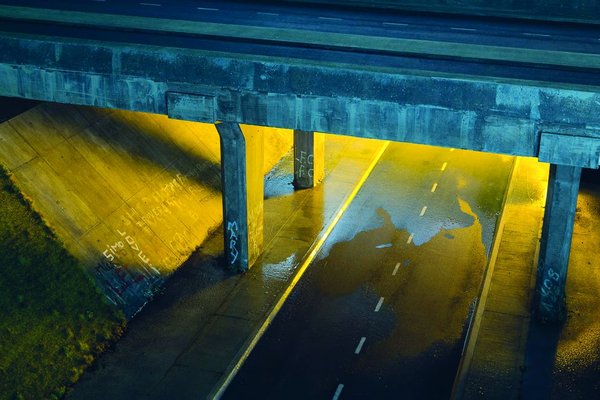
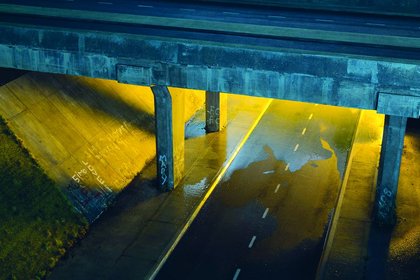
  • Describe in detail the work that this company or artist makes: The artist explores ideas of youth, class, memory and nostalgia. This particular piece considers memories, social history, subcultures, experiences and technology. In a large gallery space at the Tate Britain, a life size replica of a bridge on a section of the M53, a copy of a motorway flyover close to his childhood home, specifically north west of England near Liverpool. The artist communicates ideas about how technology makes our attention distributed and also how it acts like a bridge, across time. Technology’s ability to call up anytime anyplace and for us to inhabit it. There are large scale projected videos – “Fiorucci made me hardcore” 1990 and dream english kid 1964-1999 AD 2015, pieces previously made by Lecky and reused in this work. using old and new video footage a sound and light experience is created. “O’ magic power of bleakness” evolved from his film (video) “Dream english kid” through which he was attempting to remake his memoire. The bridge clearly relates to the theme of nostalgia, admitting it worked as a device, built in 1968 as a new modernist emblem of the future. The bridge once worked as a promise of Britain surging into the future and technology but later was seen more as a dystopian ruin. Lecky connects his own history with social history, the projected video of his ‘memoire’ under a bridge that represented times in social history: a fantasy of nuclear winter, then in the 90s rebranded to represent the taking of Britain back to swinging 60s and it’s prime.

context of the artist or company’s work:

  • What context is this work coming out of? Living through so many technological advancements and experiences of being outside of a major city, English/British nationalities seeming to represent different things, coming from  Birkenhead, Wirral a place the artist felt was nostalgic for Britain in a time when it felt like the British had already experienced their peak.
  • What do you think are the key preoccupations in the work they make? Preoccupation with nostalgia and his own memories as well as technology, how it affects us now and the hope it gave Britain throughout different periods in his life.
  • What do you think they are exploring/testing in their work? The personal interwoven with the social historical events. The work was an opportunity for an exorcism or attempt to rid self of negative thoughts/memories. An experience through time with music, tv adverts and old film footage.
  • Is it predominately to do with form or content or a combination? A combination, the piece relies on both the content of the videos that were previously made and projected as well as the form in a gallery space and the use of the replica bridge.
  • What methodologies and performance –making strategies do they employ in their work? Mixed media, large scale projections, imposing set pieces, multiple screens, old and new footage, music/sound.
  • Why is this artist or company’s work relevant to the work you are making/wanting to make? Transforming a space, nostalgia as a dangerous thing, attention on pop culture and social history. His video’s projected through the piece used collaged tape footage from the 70s, 80s and 90s underground dance scene in the UK which is related to the influence of drugs on creativity especially during social history, psychedelic rock music in the 60s onwards.
  • How do you plan to use this artist’s or company’s work to inform and develop your own work? I intend to inform my own work through use of similar methods to Mark Lecky, collaging of old and new footage, projections and set pieces that provoke atmosphere in a room as well as being informed by social historical contexts.
  • How does your work develop, expand and respond to the thinking behind the artist’s or company’s work? I feel that the themes of anxiety and nostalgia repeatedly referenced in Lecky’s work are very relevant to the subject I am exploring through my piece.

https://www.theguardian.com/artanddesign/2019/sep/24/mark-leckey-o-magic-power-of-bleakness-review-tate

https://www.tate.org.uk/tate-etc/issue-47-autumn-2019/mark-leckey-paul-farley-conversation-under-the-bridge

https://www.tate.org.uk/art/artists/mark-leckey-6877/introducing-mark-leckey

Case Study Research

MARK LECKEY O’ MAGIC POWER OF BLEAKNESS

Mark Leckey transforms Tate Britain’s galleries with a life-size replica of a motorway bridge on the M53 on the Wirral, Merseyside, where the artist grew up. The bridge – a recurring motif in his work – is the setting for a new audio play. Focusing on a group of teenagers, the play is inspired by folklore and stories of changelings and ‘fairy raids’ and by the artist’s own pre-adolescent experiences.

https://www.tate.org.uk/whats-on/tate-britain/exhibition/mark-leckey

MUSHROOMS: THE ART, DESIGN AND FUTURE OF FUNGI

Bringing together the work of over 40 leading artists, designers and musicians, Mushrooms looks at fungi’s colourful cultural legacy, as well as the promise it offers to reimagine our relationship with the planet.

https://www.somersethouse.org.uk/whats-on/mushrooms-art-design-and-future-fungi

MOCO Museum Amsterdam

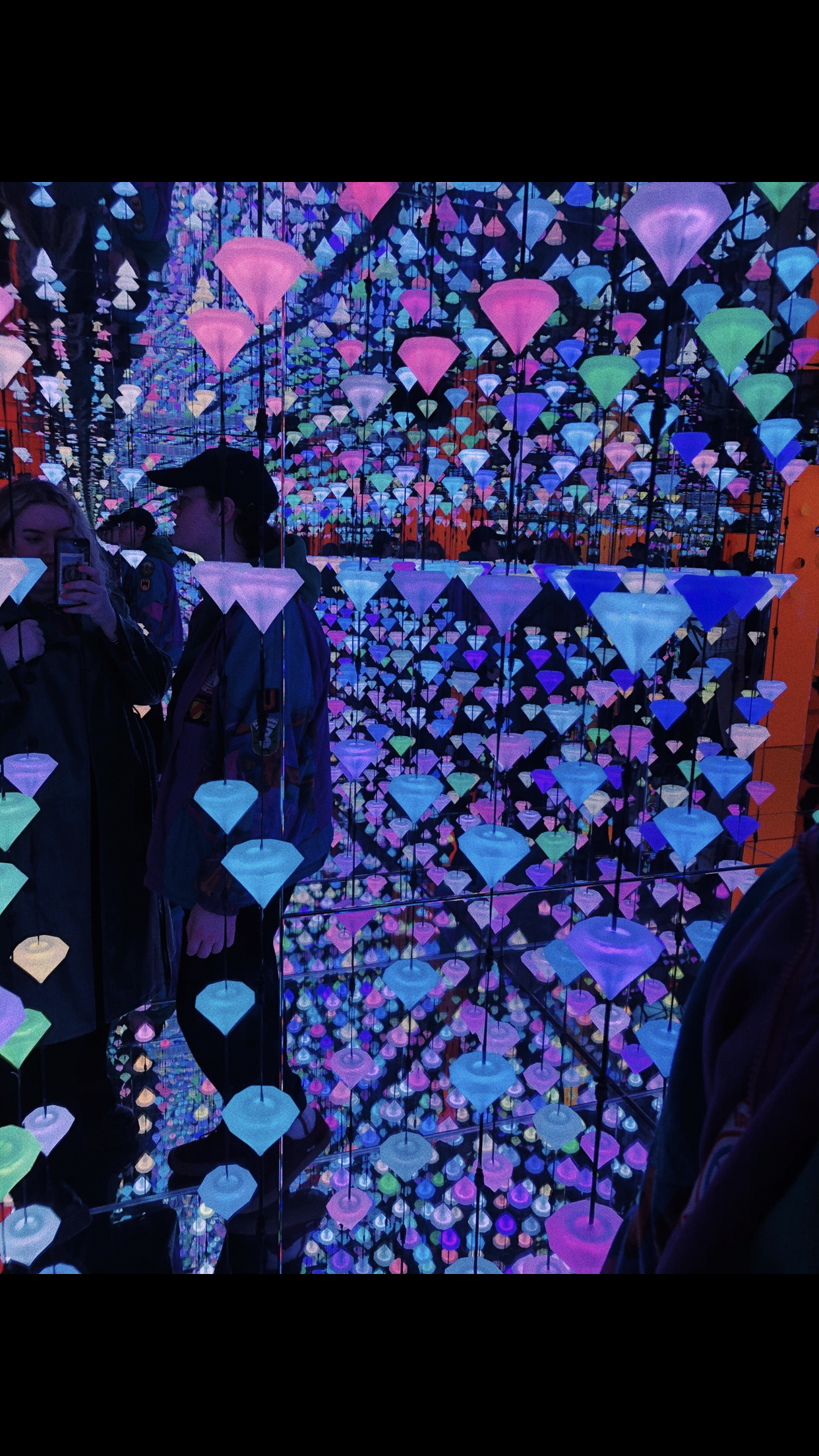
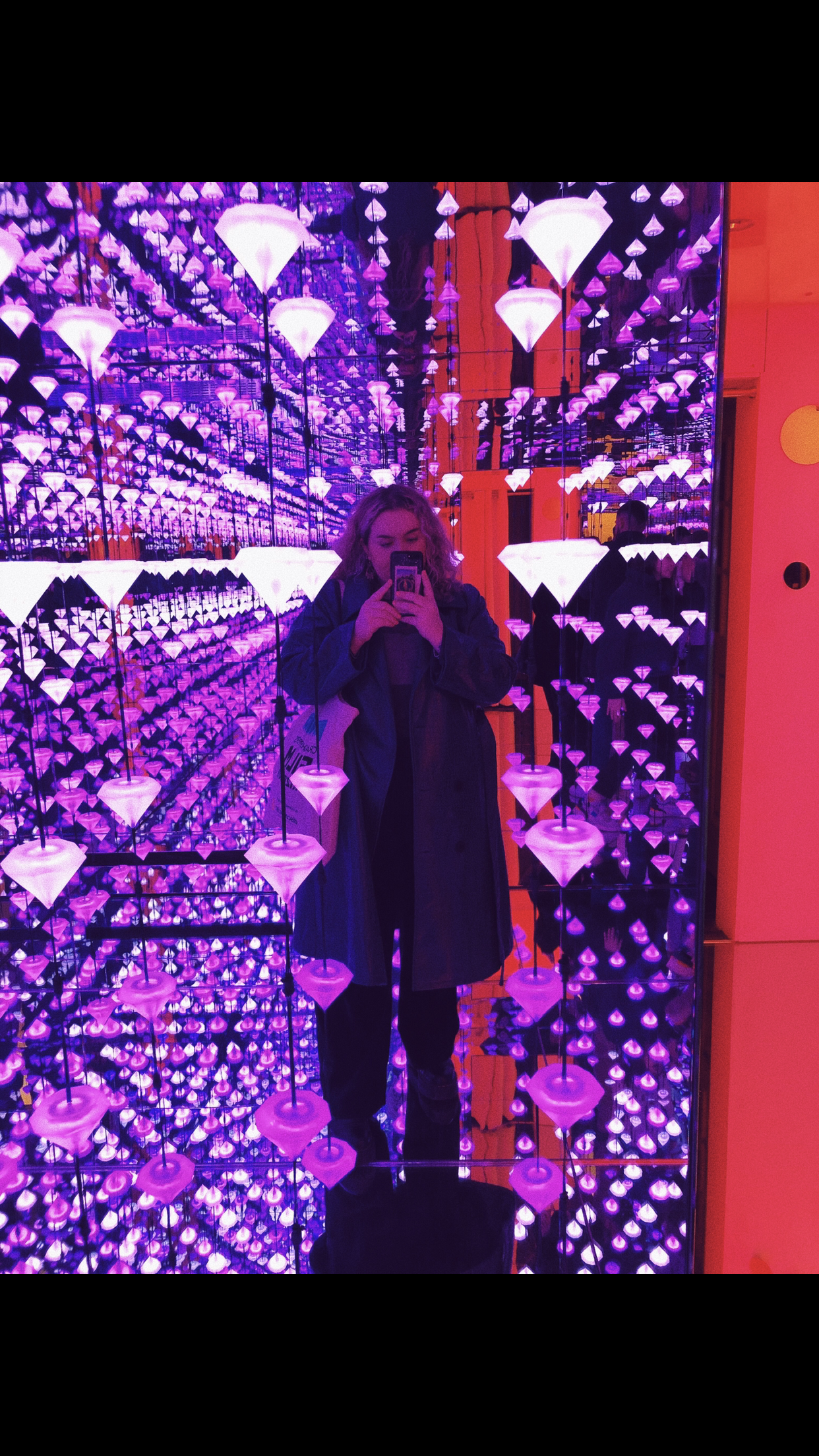
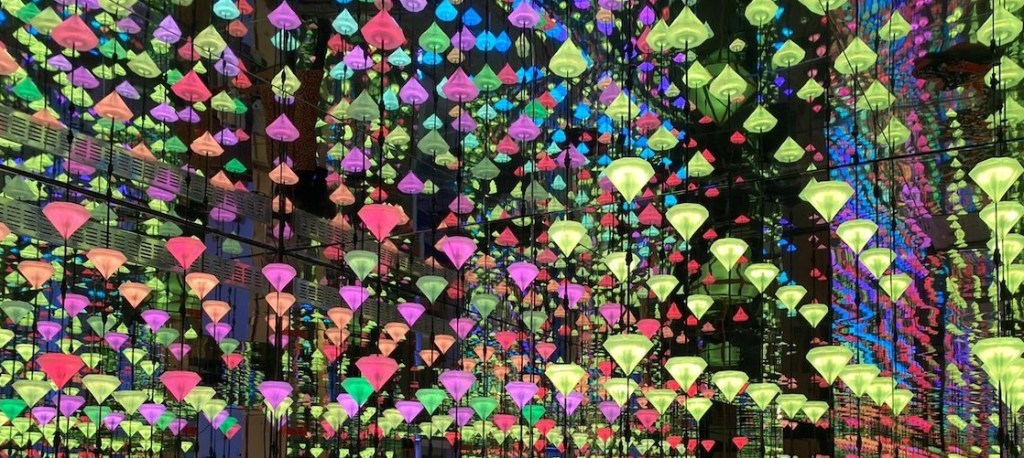
Studio Irma, Reflecting Forward: In Search of Connectivism

The Digital Immersive Art exhibition by Studio Irma x Moco celebrates connection. When we allow ourselves to be guided by compassion and empathy, we arrive at a brighter tomorrow. Discover the endless power of art in Reflecting Forward.

https://mocomuseum.com/exhibitions/

V&A: Tim Walker: Wonderful Things

Experience the extraordinary creative process of one of the world’s most inventive photographers through his pictures, films, photographic sets, and special installations – including ten new series of photographs influenced by the V&A’s collections.